
Nissan Rogue (T33) 2021-Present Service Manual: Ventilation, Heater & Air Conditioner :: Ventilation System
Precaution :: Precautions
Precaution for Supplemental Restraint System (SRS) "AIR BAG" and "SEAT BELT PRE-TENSIONER"
The Supplemental Restraint System such as “AIR BAG� and “SEAT BELT PRE-TENSIONER�, used along with a front seat belt, helps to reduce the risk or severity of injury to the driver and front passenger for certain types of collisions.
Information necessary to service the system safely is included in the “SRS AIR BAG� and “SEAT BELT� sections of this Service Manual.
WARNING:
Always observe the following items for preventing accidental activation:
-
To avoid rendering the SRS inoperative, which could increase the risk of personal injury or death in the event of a collision that would result in air bag inflation, it is recommended that all maintenance and repair be performed by an authorized NISSAN/INFINITI dealer.
-
Improper repair, including incorrect removal and installation of the SRS, can lead to personal injury caused by unintentional activation of the system. For removal of Spiral Cable and Air Bag Module, see “SRS AIR BAG�.
-
Never use electrical test equipment on any circuit related to the SRS unless instructed to in this Service Manual. SRS wiring harnesses can be identified by yellow and/or orange harnesses or harness connectors.
PRECAUTIONS WHEN USING POWER TOOLS (AIR OR ELECTRIC) AND HAMMERS
WARNING:
Always observe the following items for preventing accidental activation:
-
When working near the Air Bag Diagnosis Sensor Unit or other Air Bag System sensors with the ignition/power switch ON or engine running, never use air or electric power tools or strike near the sensor(s) with a hammer. Heavy vibration could activate the sensor(s) and deploy the air bag(s), possibly causing serious injury.
-
When using air or electric power tools or hammers, always switch the ignition/power switch OFF, disconnect the 12V battery or batteries, and wait at least 3 minutes before performing any service.
Precautions for Removing Battery Terminal
-
With the adoption of Auto ACC function, ACC power is automatically supplied by operating the Intelligent Key or remote keyless entry or by opening/closing the driver side door. In addition, ACC power is supplied even after the ignition switch is in the OFF position, i.e. ACC power is supplied for a certain fixed time.
-
When disconnecting the 12V battery terminal, place the ignition switch in the OFF position before disconnecting the 12V battery terminal, observing “How to disconnect 12V battery terminal� described below.
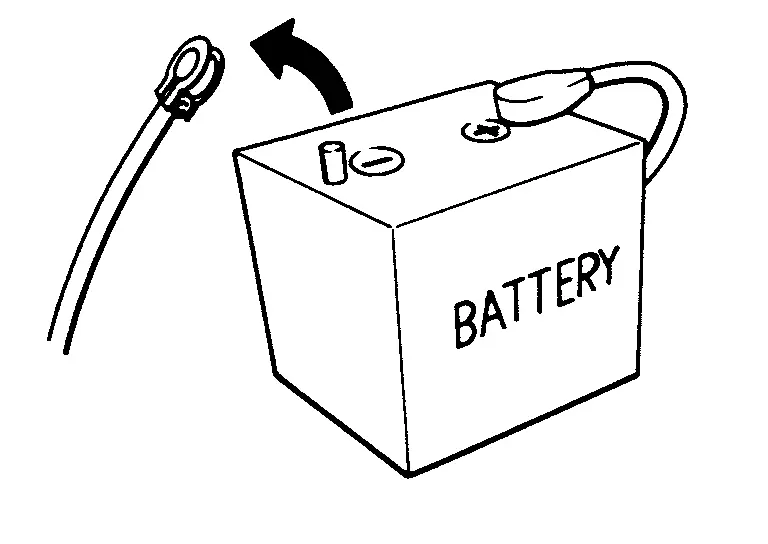
 NOTE:
NOTE:
Some ECUs operate for a certain fixed time even after ignition switch is in the OFF position and ignition power supply is stopped. If the battery terminal is disconnected before ECU stops, accidental DTC detection or ECU data damage may occur.
-
For Nissan Ariya vehicles with the 2-batteries, be sure to connect the main battery and the sub battery before placing the ignition switch in the ON position.
NOTE:
If the ignition switch is in the ON position with any one of the terminals of main battery and sub battery disconnected, then DTC may be detected.
-
After installing the 12V battery, always check "Self Diagnosis Result" of all ECUs and erase DTC.
NOTE:
The removal of 12V battery may cause a DTC detection error.
HOW TO DISCONNECT 12V BATTERY TERMINAL
Disconnect 12V battery terminal according to instruction described below.
-
Open the hood.
-
Place the ignition switch in the ON position.
-
Place the ignition switch in the OFF position with the driver side door opened.
-
Get out of the Nissan Ariya vehicle and close the driver side door.
-
Wait at least 3 minutes.
CAUTION:
While waiting, never operate the Nissan Ariya vehicle such as locking, opening, and closing doors. Violation of this caution results in the activation of ACC power supply according to the Auto ACC function.
-
Remove 12V battery terminal.
CAUTION:
After installing 12V battery, always check self-diagnosis results of all ECUs and erase DTC.
Precautions for Work
-
When removing or disassembling each component, be careful not to damage or deform it. If a component may be subject to interference, be sure to protect it with a shop cloth.
-
When removing (disengaging) components with a screwdriver or similar tool, be sure to wrap the component with a shop cloth or vinyl tape to protect it.
-
Protect the removed parts with a shop cloth and prevent them from being dropped.
-
Replace a deformed or damaged clip.
-
If a part is specified as a non-reusable part, always replace it with a new one.
-
Be sure to tighten bolts and nuts securely to the specified torque.
-
After installation is complete, be sure to check that each part works properly.
-
Follow the steps below to clean components:
-
Water soluble dirt:
-
Dip a soft cloth into lukewarm water, wring the water out of the cloth and wipe the dirty area.
-
Then rub with a soft, dry cloth.
-
-
Oily dirt:
-
Dip a soft cloth into lukewarm water with mild detergent (concentration: within 2 to 3%) and wipe the dirty area.
-
Then dip a cloth into fresh water, wring the water out of the cloth and wipe the detergent off.
-
Then rub with a soft, dry cloth.
-
-
Do not use organic solvent such as thinner, benzene, alcohol or gasoline.
-
For genuine leather seats, use a genuine leather seat cleaner.
-
Preparation
Special Service Tools
The actual shapes of TechMate tools may differ from those of special service tools illustrated here.
|
Tool number (TechMate No.) Tool name | Description | |
|---|---|---|
|
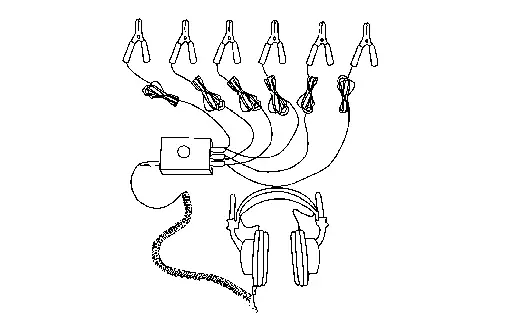
(NI-39570) Chassis ear |
|
Locates the noise |
|
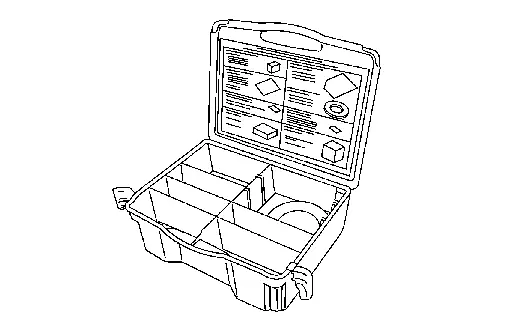
(NI-50397) Squeak and Rattle Kit |
|
Repairs the cause of noise |
Commercial Service Tool
| Tool name | Description | |
|---|---|---|
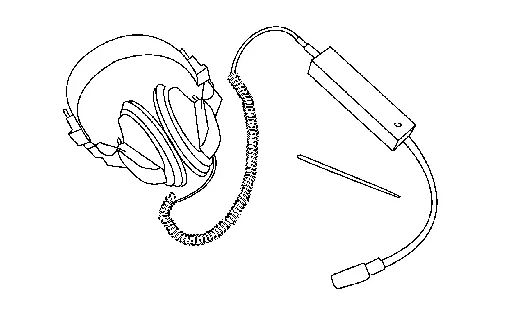
| Engine ear |
|
Locates the noise |
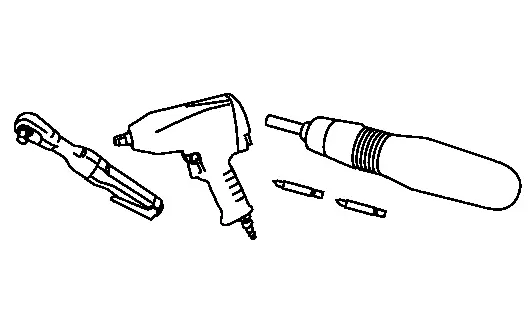
| Power tool |
|
Loosening bolts, nuts and screws |
System Description :: Ventilation System
System Description
OUTLINE
Ventilation system is controlled by A/C amp. For details of air conditioner system, refer to System Description (AUTOMATIC AIR CONDITIONER), System Description (MANUAL AIR CONDITIONER).
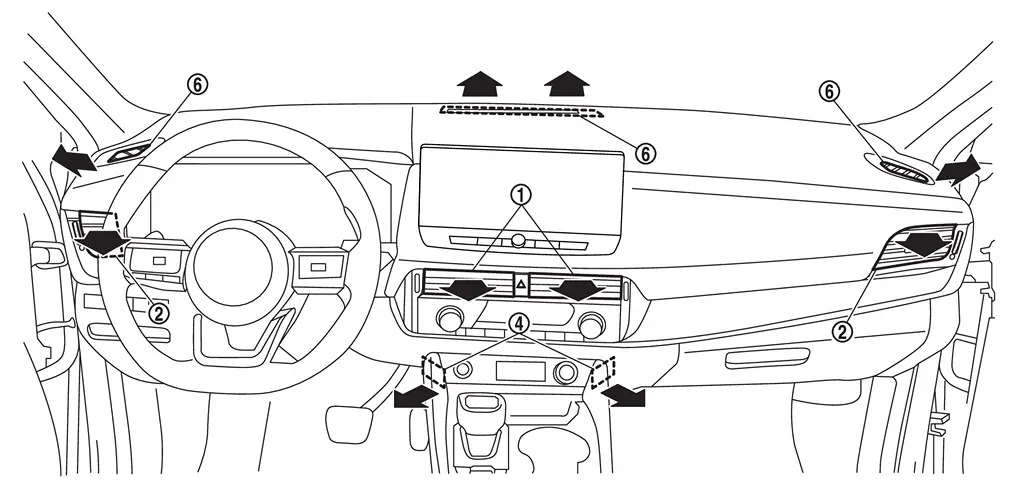
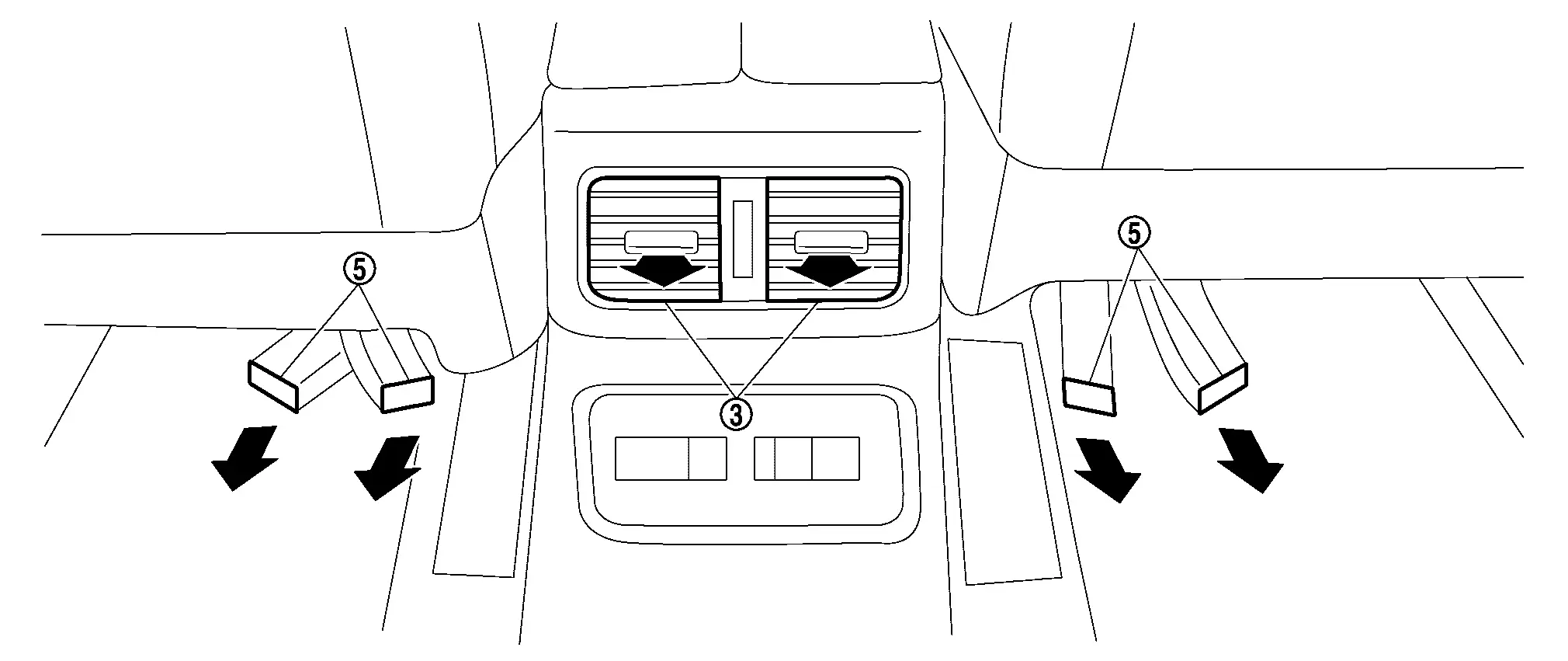
AIR FLOW
Front
Rear
×: Applicable
| MODE/DEF position indication | AIR OUTLET | |||||
|---|---|---|---|---|---|---|
| Ventilator | Foot | Defroster  | ||||
| Front | Rear  | Front  | Rear  | |||
Center  | Side  | |||||
 |
× | × | × | — | — | — |
 |
× | × | × | × | × | — |
 |
— | × | × | × | × | × |
 |
— | × | × | × | × | × |
 |
— | × | × | — | — | × |
Removal and Installation :: Duct and Grille
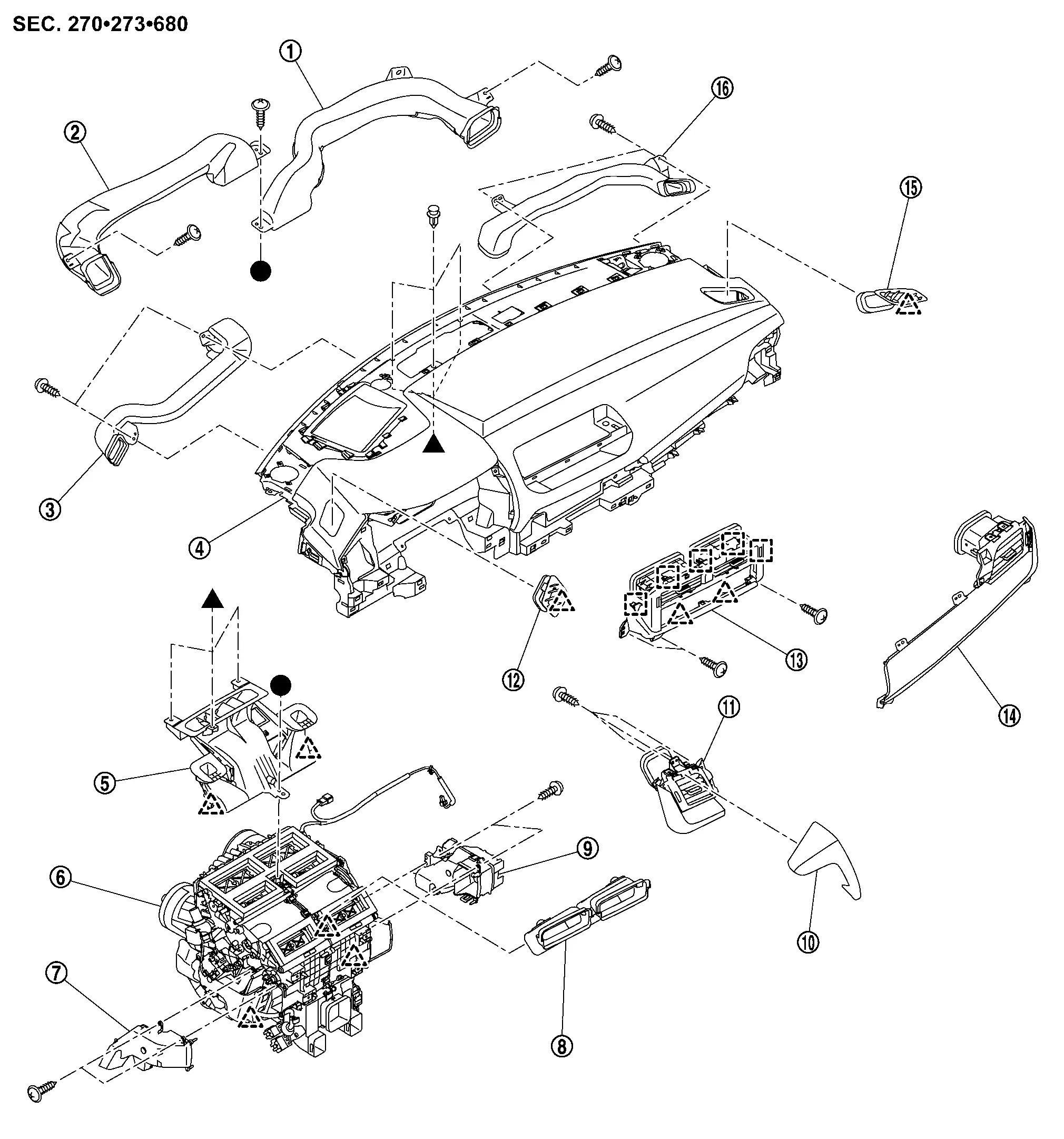
Exploded View
|
Side ventilator duct RH | |
Side ventilator duct LH | |
Side defroster nozzle LH |
|
Instrument panel assembly | |
Front defroster nozzle | |
Heater & cooling unit assembly |
 |
Foot duct LH |  |
Center ventilator duct |  |
Foot duct RH |
 |
Instrument pad A |  |
Side ventilator grille assembly LH |  |
Side defroster grille LH |
 |
Center ventilator grille |  |
Side ventilator grille assembly RH |  |
Side defroster grille RH |
 |
Side defroster nozzle RH | ||||
 |
: Pawl | ||||
 , ,  : Indicates that the part is connected at points with same symbol in actual Nissan Ariya vehicle. : Indicates that the part is connected at points with same symbol in actual Nissan Ariya vehicle. |
|||||
Rear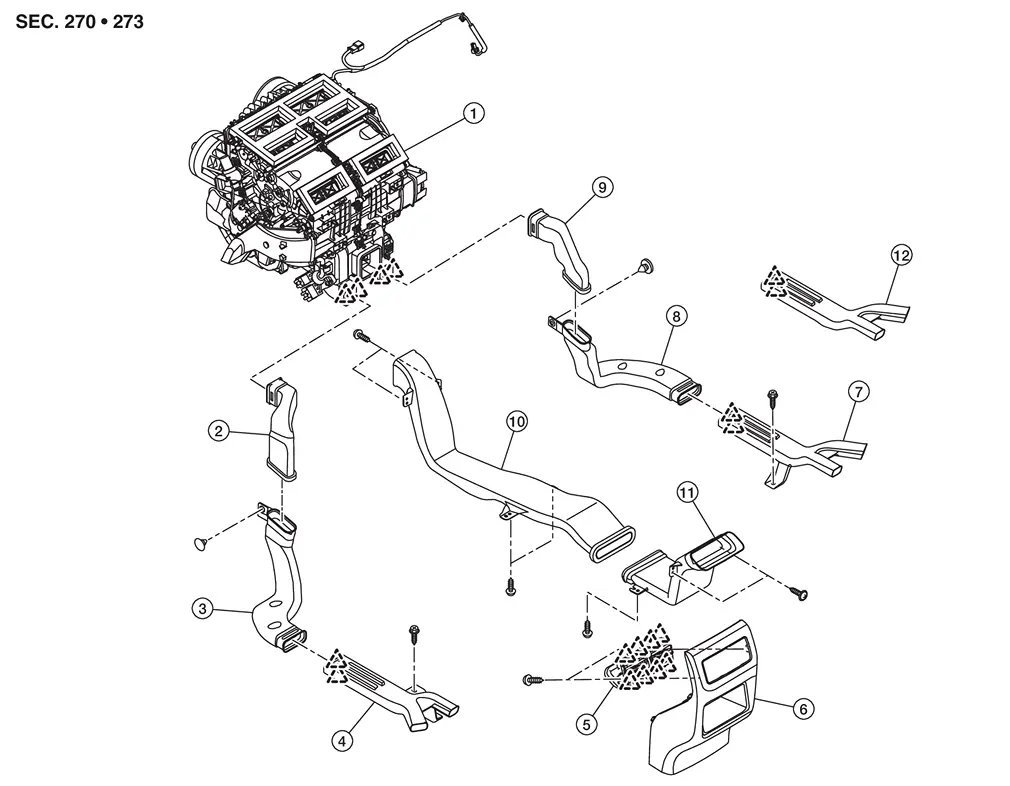
|
Heater & cooling unit assembly | |
Rear floor duct 1 LH | |
Rear floor duct 2 LH |
|
Rear floor duct 3 LH | |
Rear ventilator grille | |
Console rear finisher |
|
Rear floor duct 3 RH (if so equipped) | |
Rear floor duct 2 RH | |
Rear floor duct 1 RH |
|
Rear ventilator duct 1 | |
Rear ventilator duct 2 | |
Rear floor duct 3 RH (if so equipped) |
|
: Pawl | ||||
Center Ventilator Grille
Removal and Installation
REMOVAL
Remove center ventilator grille. Refer to Removal and Installation.
INSTALLATION
Install in the reverse order of removal.
Side Ventilator Grille
Removal and Installation
REMOVAL
LH Side
Remove instrument pad A. Refer to Removal and Installation.
RH Side
Remove side ventilator grille assembly RH. Refer to Removal and Installation.
INSTALLATION
Install in the reverse order of removal.
Center Ventilator Duct
Removal and Installation
REMOVAL
Remove center ventilator grille. Refer to Removal and Installation.
Remove AV control unit. Refer to Removal and Installation.
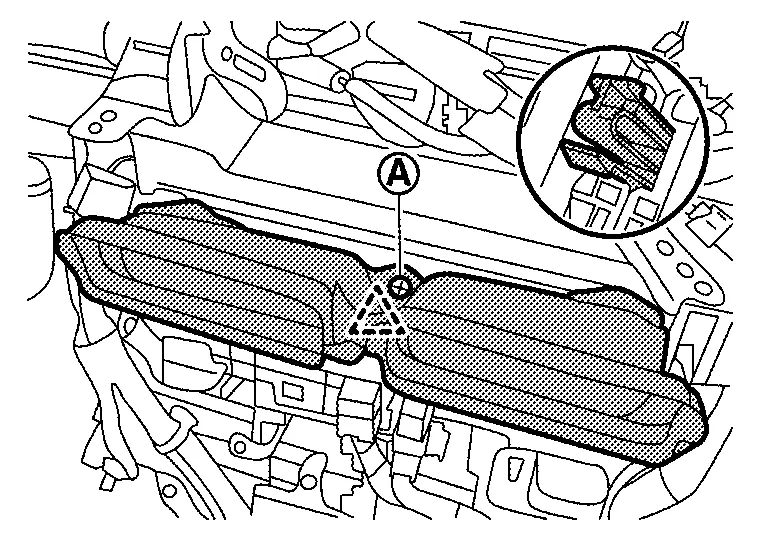
Remove fixing screw  and disengage fixing pawl, and then remove center ventilator duct.
|
: Pawl |
INSTALLATION
Install in the reverse order of removal.
Side Ventilator Duct
Removal and Installation
REMOVAL
Remove instrument panel assembly. Refer to Removal and Installation.
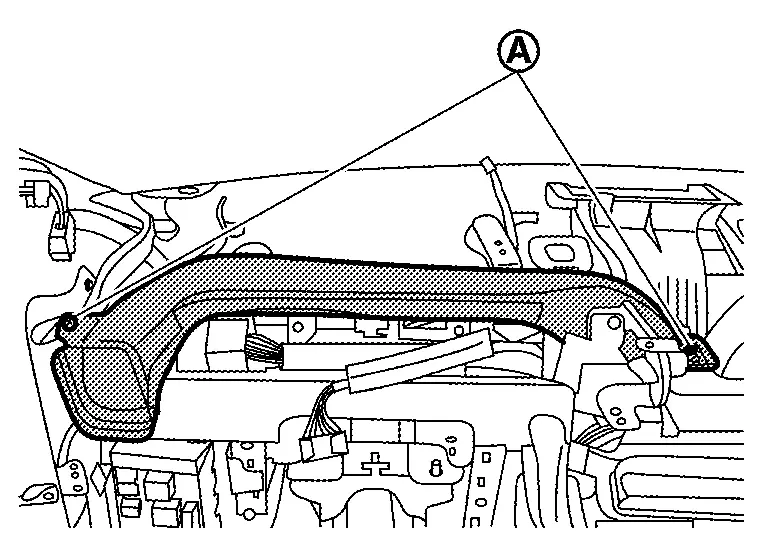
Remove fixing screws , and then remove side ventilation duct LH.
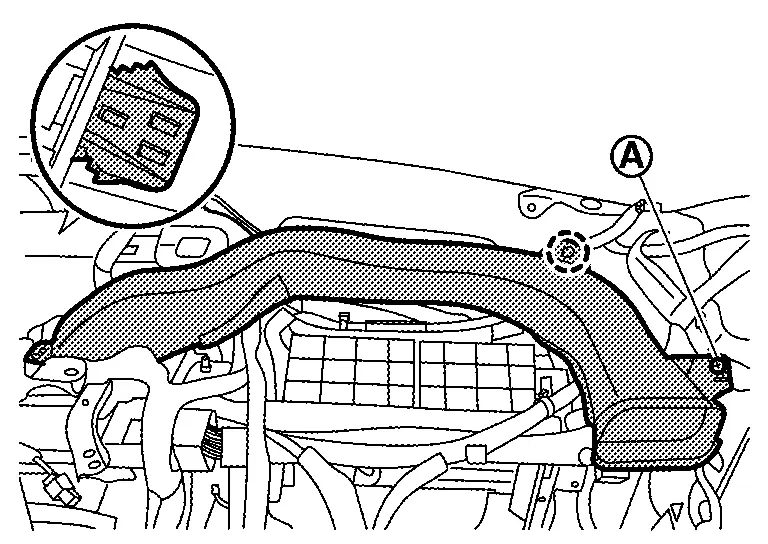
Disengage harness clip and remove fixing screw , and then remove side ventilation duct RH.
 |
: Harness clip |
INSTALLATION
Install in the reverse order of removal.
Front Defroster Nozzle
Removal and Installation
REMOVAL
Remove side ventilator duct. Refer to Removal and Installation.
Disengage fixing pawls, and then remove front defroster nozzle.
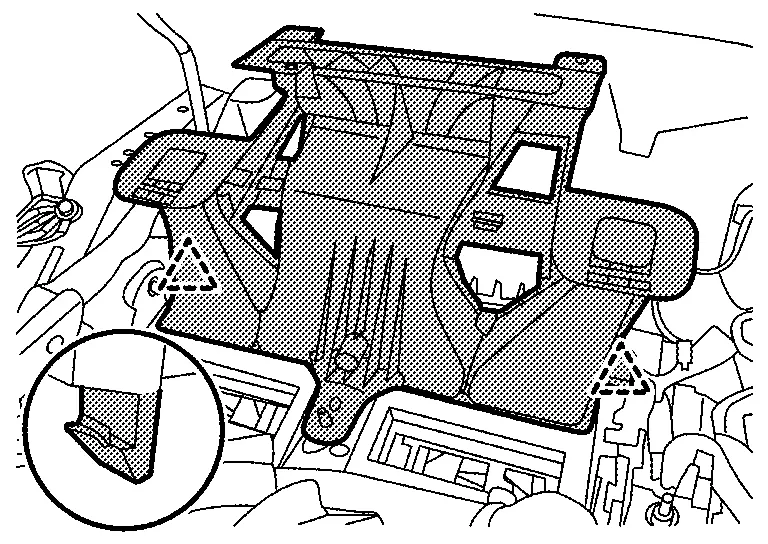
|
: Pawl |
INSTALLATION
Install in the reverse order of removal.
Side Defroster Nozzle
Removal and Installation
REMOVAL
Remove instrument panel assembly. Refer to Removal and Installation.
Remove fixing screws , and then remove side defroster nozzle.
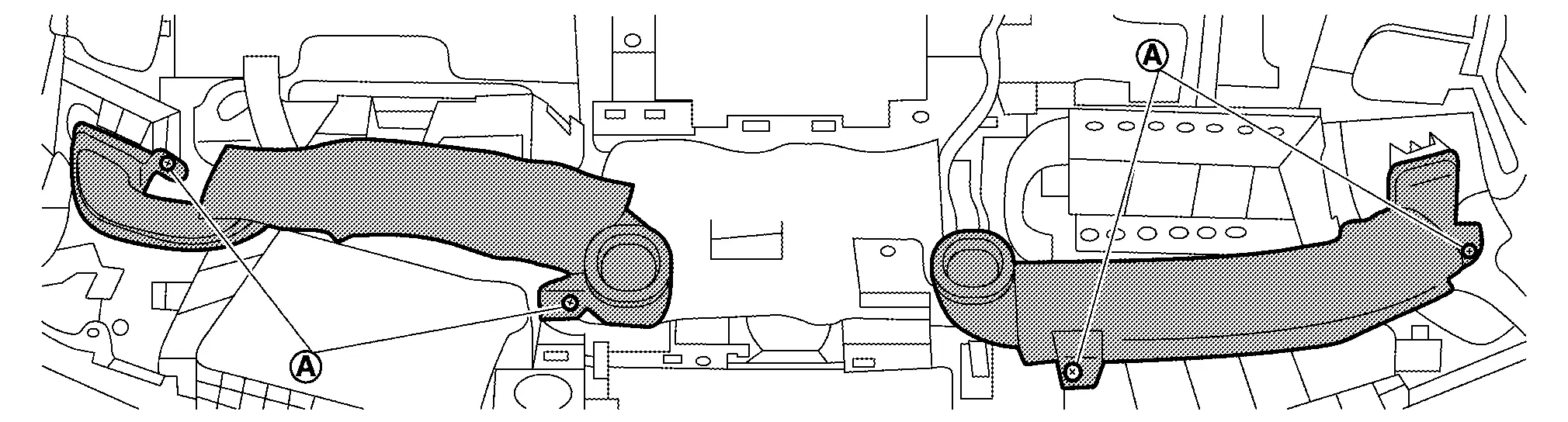
INSTALLATION
Install in the reverse order of removal.
Side Defroster Grille
Removal and Installation
REMOVAL
Apply protective tape (A) to protect parts from damage.
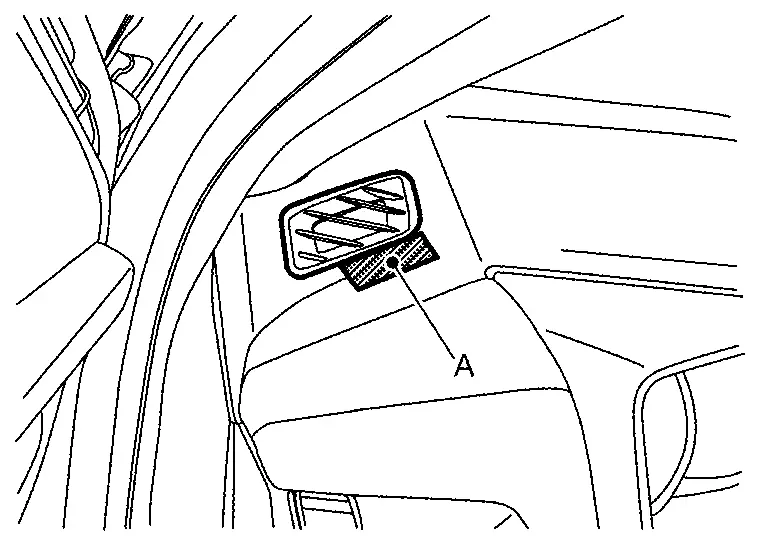
Disengage fixing pawl using a remover tool (A), and then remove side defroster grille.
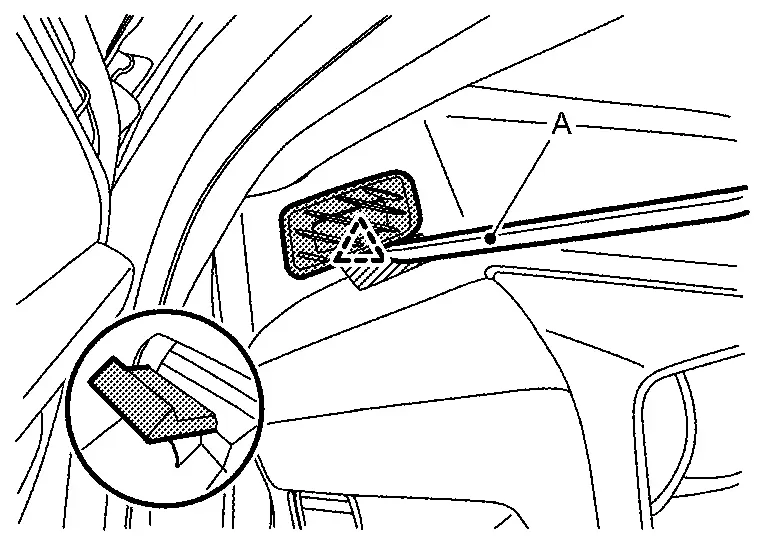
|
: Pawl |
INSTALLATION
Install in the reverse order of removal.
Foot Duct
Removal and Installation
REMOVAL
LH Side
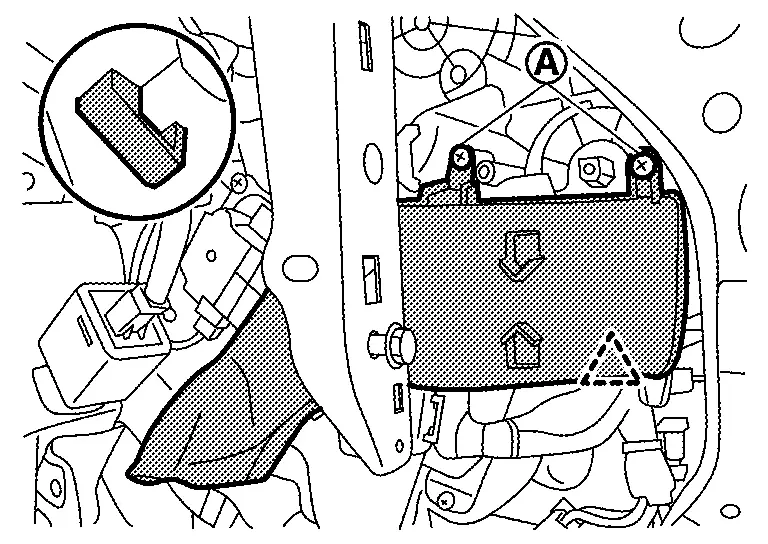
Remove instrument lower panel LH and instrument lower panel center. Refer to Removal and Installation.
Remove fixing screws and disengage fixing pawl, and then remove foot duct LH.
|
: Pawl |
RH Side
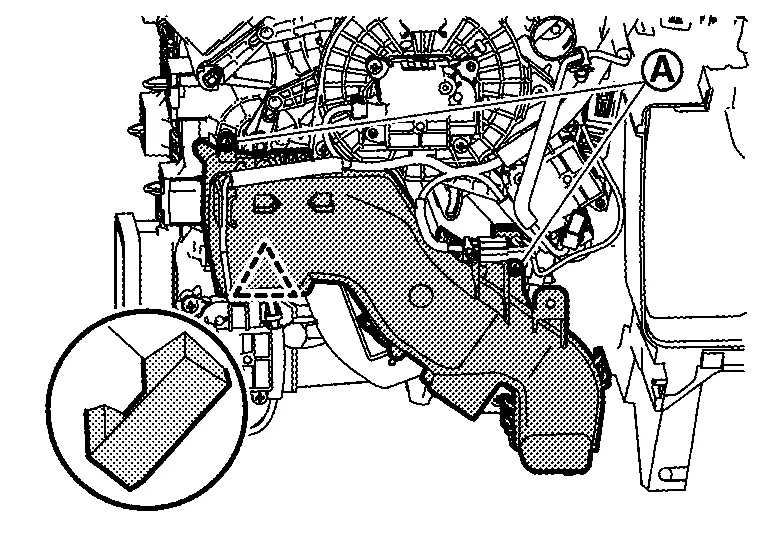
Remove steering member. Refer toRemoval and Installation (KR15DDT).
Remove fixing screws and disengage fixing pawl, and then remove foot duct RH.
|
: Pawl |
INSTALLATION
Install in the reverse order of removal.
Rear Floor Duct
Removal and Installation
REMOVAL
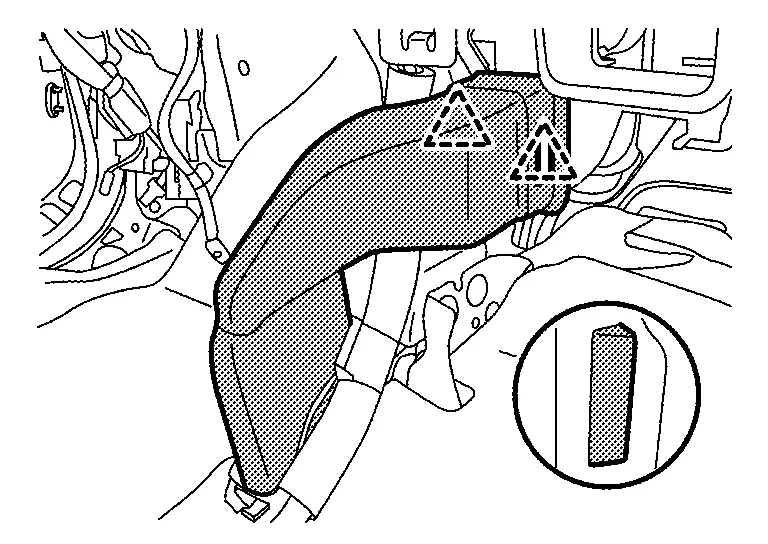
Remove center console assembly. Refer to Removal and Installation.
Disengage fixing pawls, and then remove rear floor duct 1.
|
: Pawl |
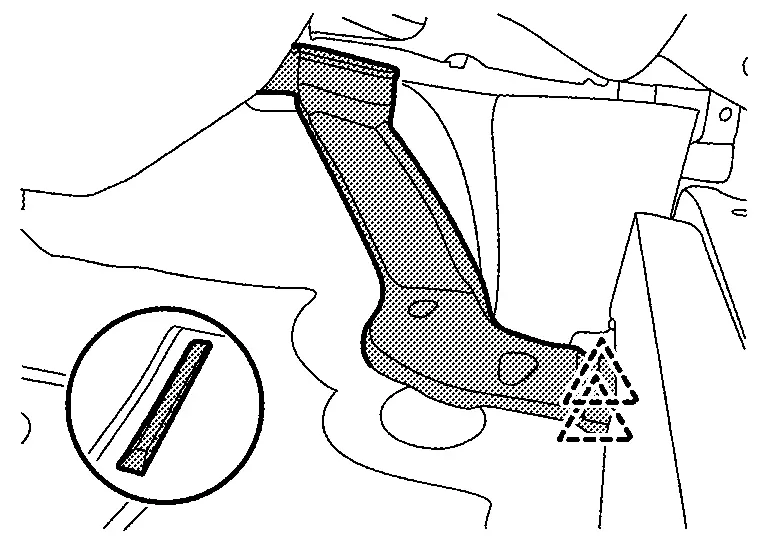
Disengage rear floor duct 2 fixing clip using a remover tool (A).
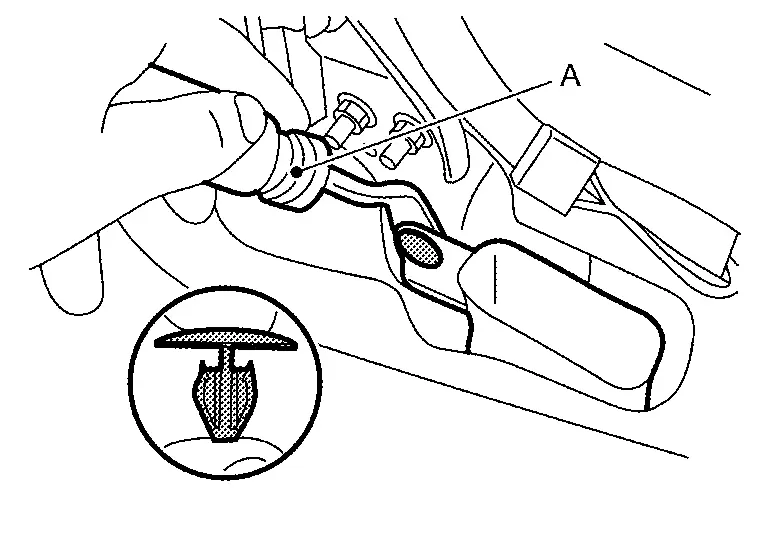
Peel off front floor carpet to secure work space. Refer to Removal and Installation.
Disengage fixing pawls, and then remove rear floor duct 2.
|
: Pawl |
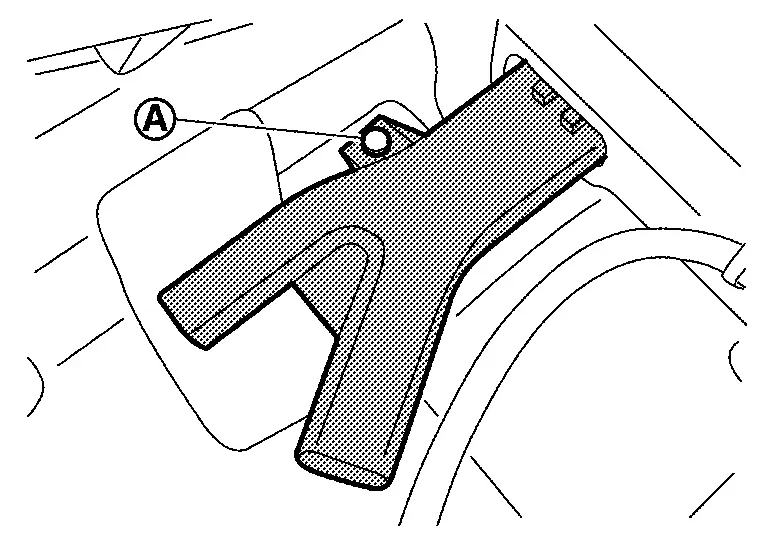
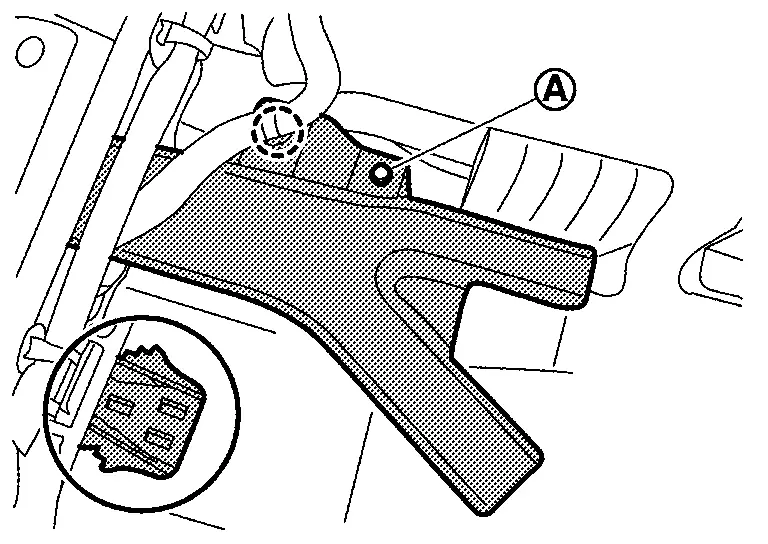
Remove rear floor duct 3.
-
RH Side
Remove fixing screw (A) (if so equipped), and then remove rear floor duct 3 RH.
-
LH Side
Disengage harness clip and remove fixing screw (A), and then remove rear floor duct 3 LH.
: Harness clip
INSTALLATION
Install in the reverse order of removal.
Rear Ventilator Duct
Removal and Installation
REMOVAL
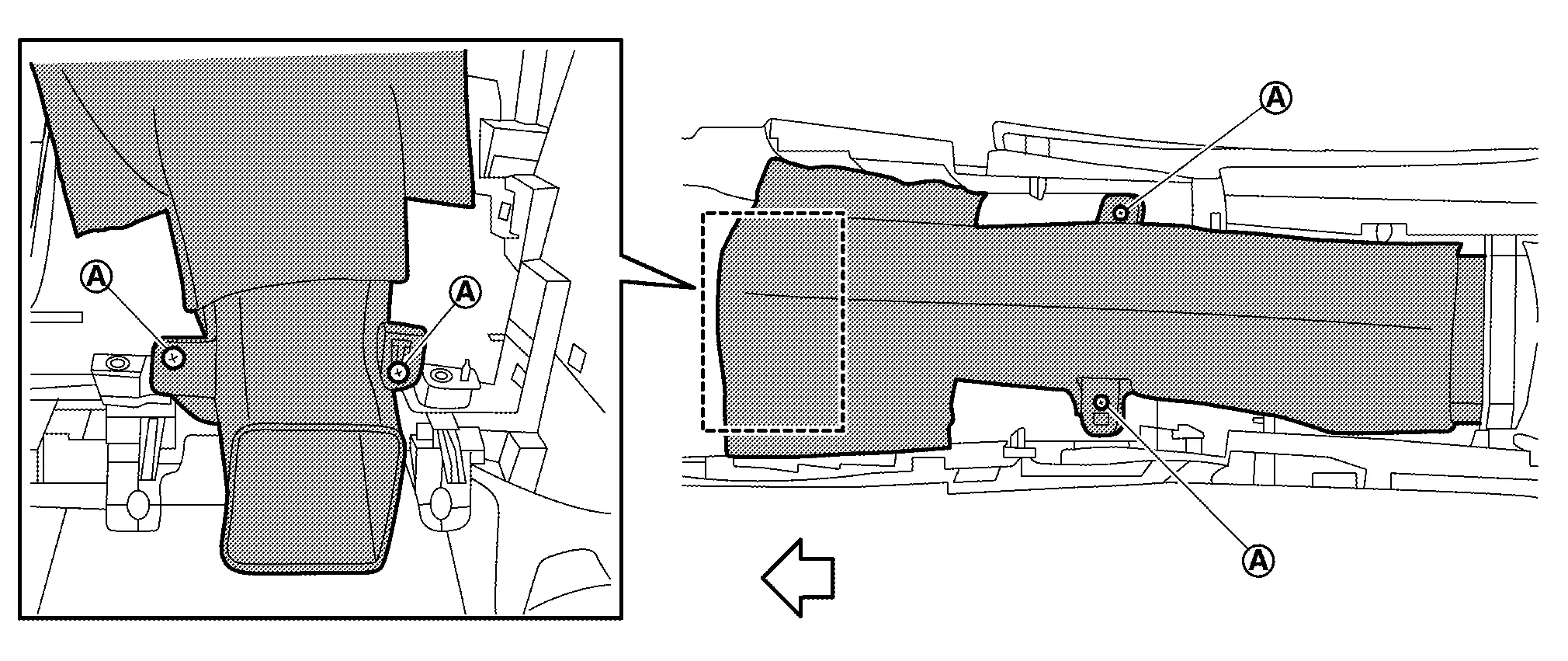
Remove center console assembly. Refer to Removal and Installation.
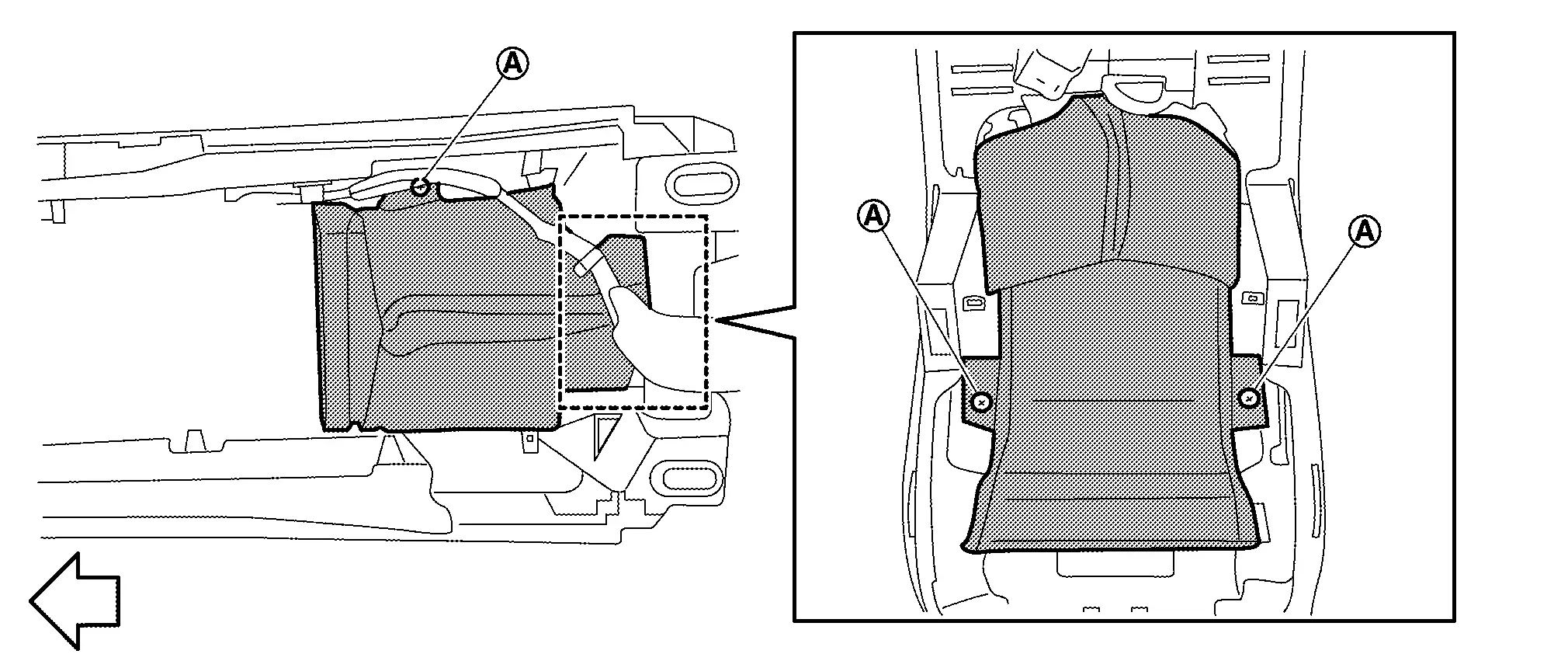
Remove fixing screws , and then remove rear ventilator duct 1.
 |
: Nissan Ariya Vehicle front |
Remove fixing screws , and then remove rear ventilator duct 2.
|
: Nissan Ariya Vehicle front |
INSTALLATION
Install in the reverse order of removal.
Rear Ventilator Grille
Removal and Installation
REMOVAL
Remove console rear finisher. Refer to Removal and Installation.
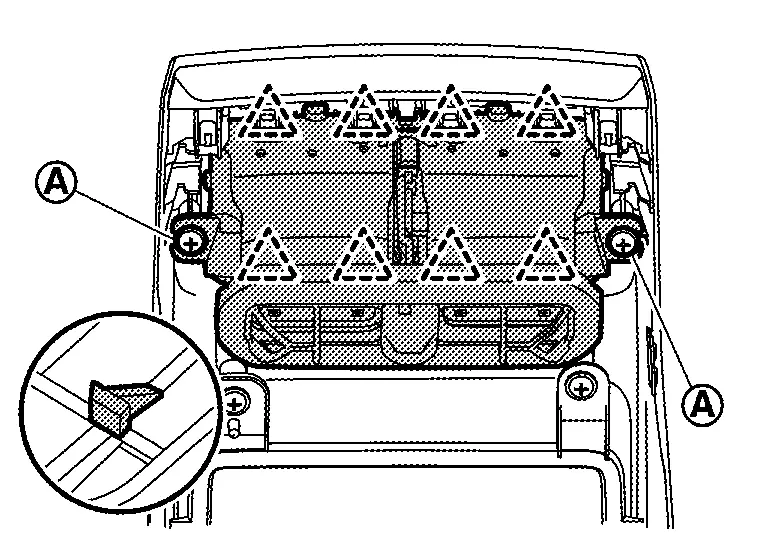
Remove fixing screws and disengage fixing pawls, and then remove rear ventilator grille from console rear finisher.
|
: Pawl |
INSTALLATION
Install in the reverse order of removal.
Removal and Installation :: Blower Unit
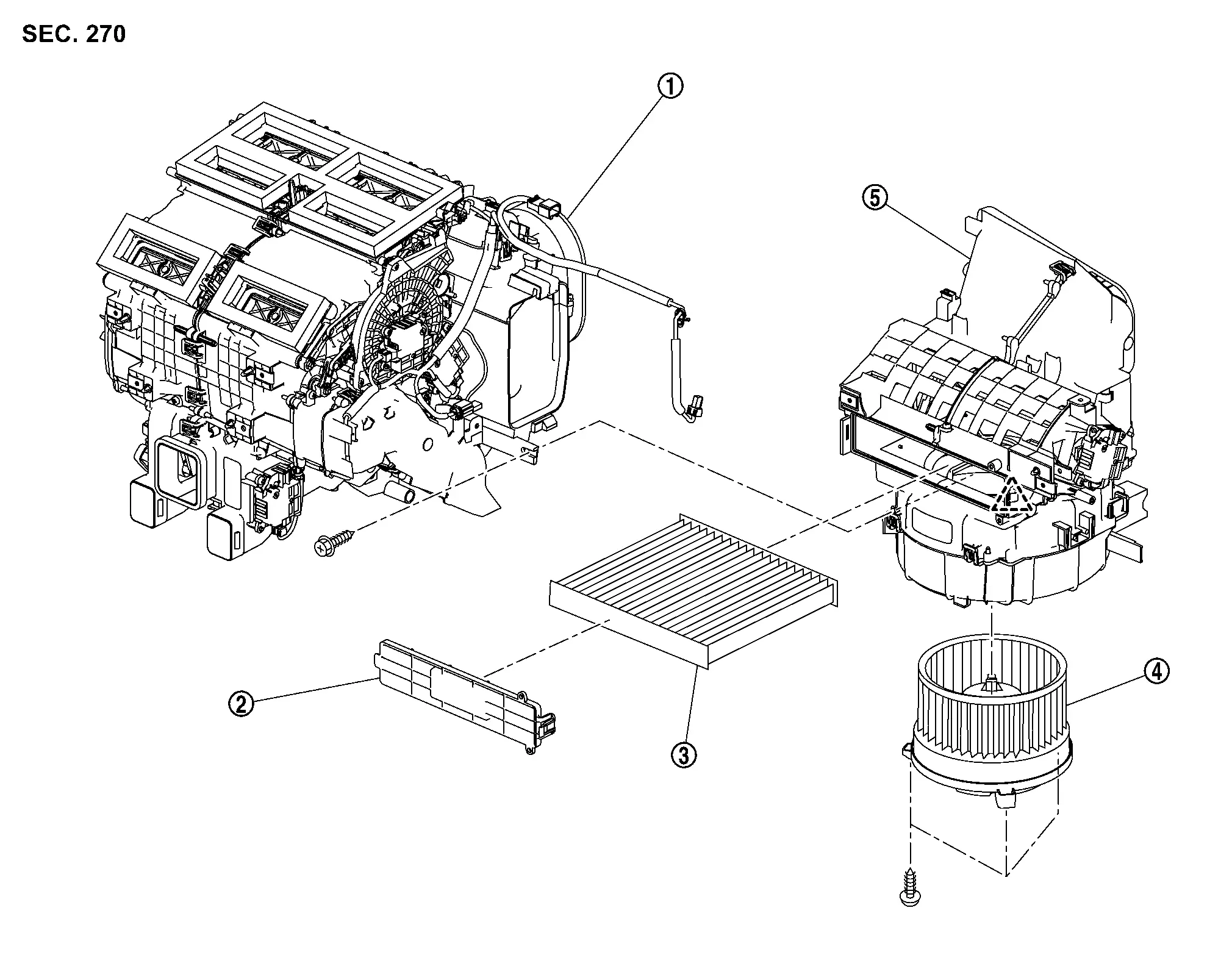
Exploded View
|
Heater & cooling unit assembly | |
Filter cover | |
In-cabin microfilter |
|
Blower motor | |
Blower unit | ||
|
: Pawl | ||||
Removal and Installation
REMOVAL
Remove heater & cooling unit assembly and blower unit as an assembly. Refer to Removal and Installation (KR15DDT).
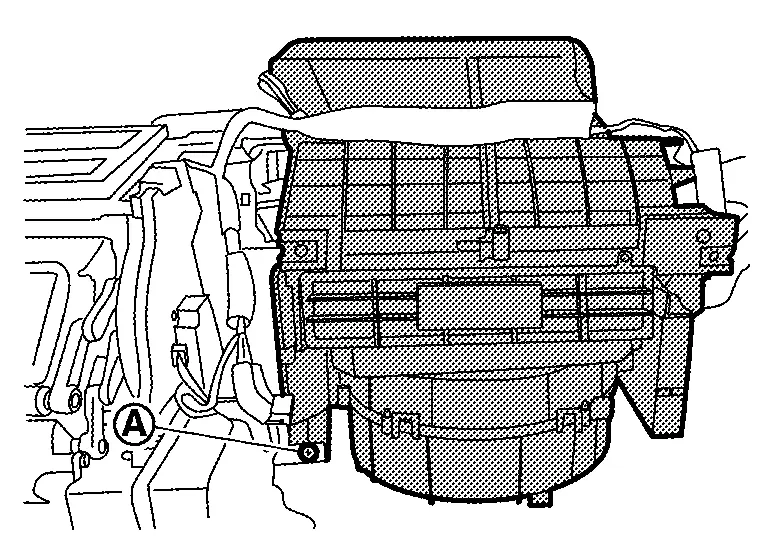
Disconnect harness connector.
Remove fixing screw , and then remove blower unit.
INSTALLATION
Install in the reverse order of removal.
Removal and Installation :: Blower Motor
Removal and Installation
REMOVAL
Remove glove box. Refer to Removal and Installation.
Remove passenger knee air bag module. Refer to Removal and Installation.
Disconnect harness connector.
Remove fixing screws , and then remove blower motor.
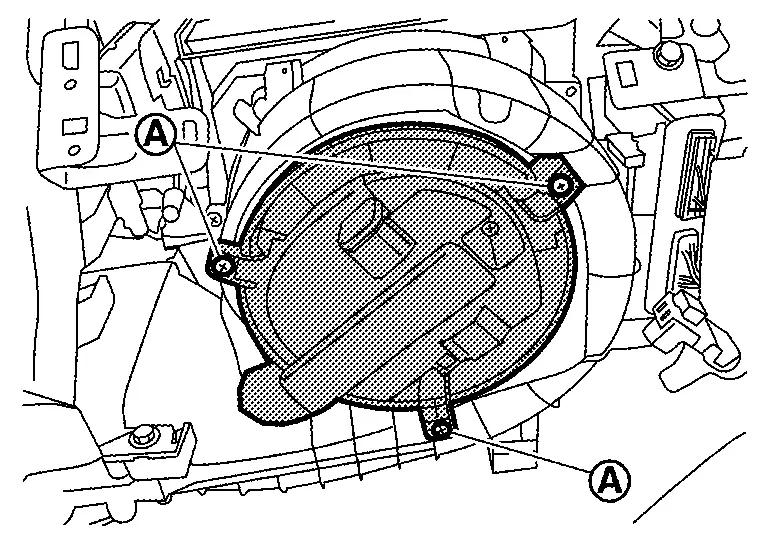
INSTALLATION
Install in the reverse order of removal.
Removal and Installation :: In-Cabin Microfilter
Removal and Installation
REMOVAL
Open glove box.
Disengage fixing pawl, and then remove filter cover.
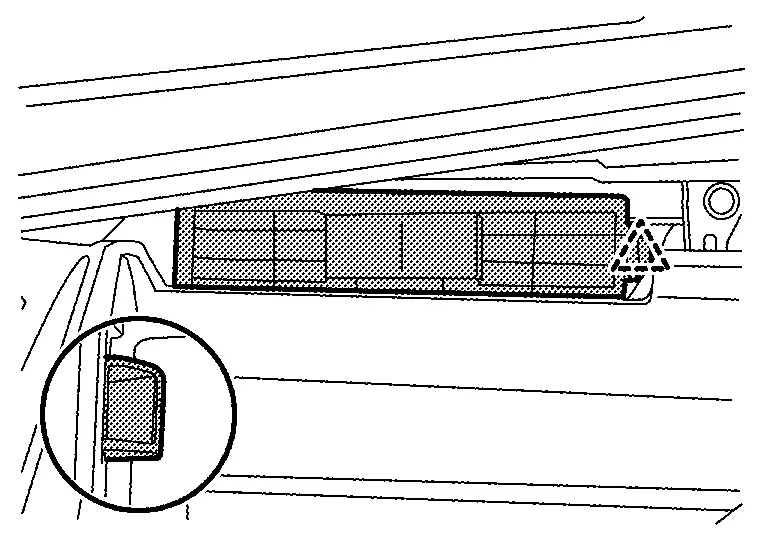
|
: Pawl |
Remove in-cabin microfilter from blower unit.
INSTALLATION
Note the following items, and then install in the reverse order of removal.
CAUTION:
-
If the filter is deformed/damaged when removing, replace it with a new one. Deformed/damaged filter may deteriorate the dust collecting performance.
-
When installing, handle the filter with extreme care to avoid deforming/damaging.
Replacement
Replace in-cabin microfilter. Refer to Removal and Installation.
NOTE:
Replace in-cabin microfilter according to replacement interval. Refer to In-cabin microfilter.
Service Data and Specifications (sds)
In-cabin microfilter
| Replacement interval | Periodic Maintenance |
Other materials:
P06b0 Sensor Power Supply 1
DTC Description
DESCRIPTIONECM supplies a voltage of 5 V to some of the
sensors systematically divided into 3 groups, respectively.
Accordingly, when a short circuit develops in a sensor power source, a
malfunction may occur simultaneously in the sensors belonging to the
same group as the s ...
Basic information
WARNING
Failure to follow the warnings and instructions for proper use of the AEB with Pedestrian Detection system on the Nissan Rogue could result in serious injury or death.
The AEB with Pedestrian Detection system is an assistive feature, not a substitute for the driver's attention or safe dri ...
P0607 Ecm
DTC Description
DTC DETECTION LOGIC DTC
CONSULT screen terms
(Trouble diagnosis content)
DTC detection condition
P0607
00
ECM
(Control module performance)
Diagnosis condition
Ignition switch ON
Signal (terminal)
—
Threshold
ECM internal communication sys ...