
Nissan Rogue (T33) 2021-Present Service Manual: Removal and Installation :: Front and Rear Washer Pump
Exploded View
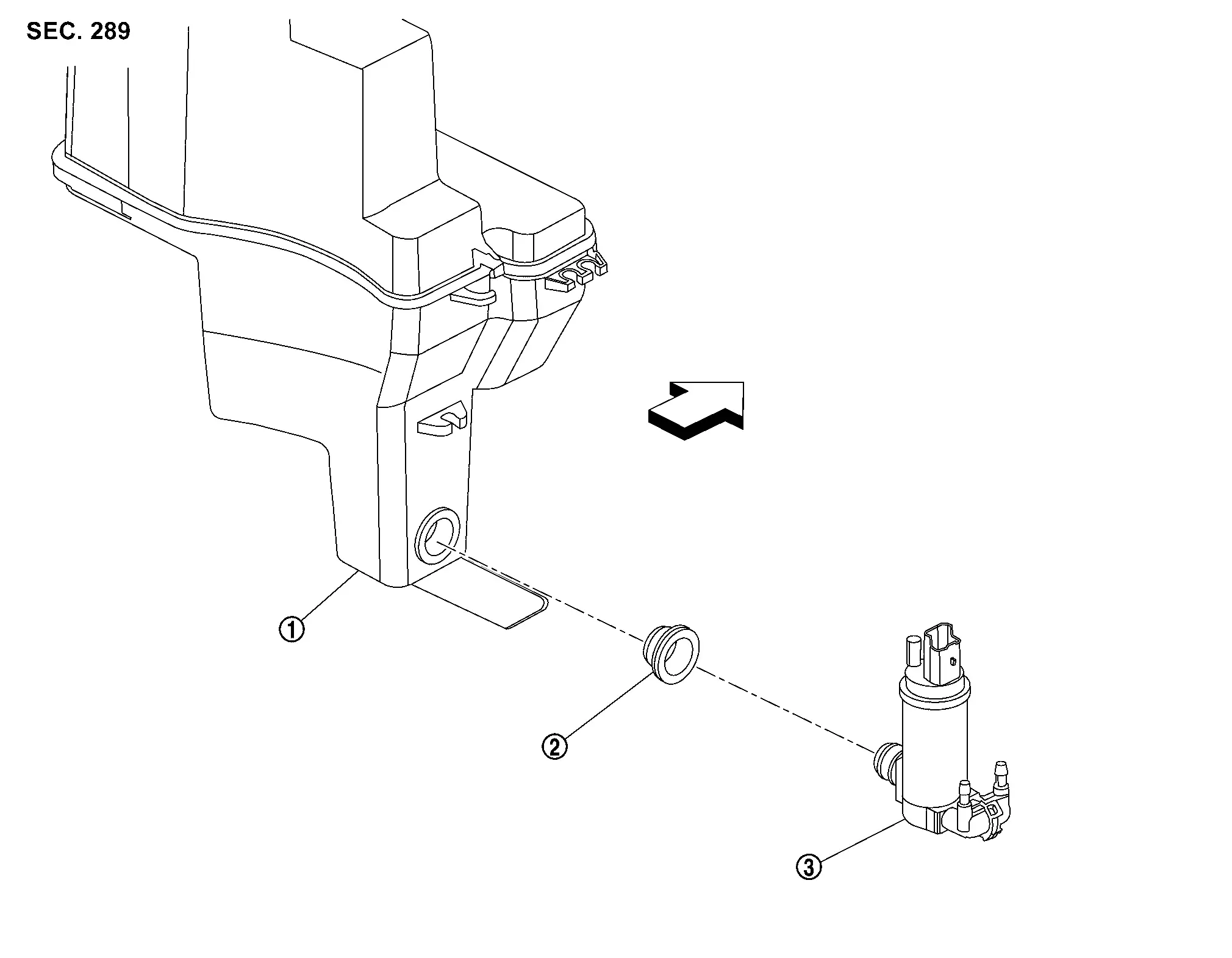
 |
Washer tank |  |
Packing |  |
Front and rear washer pump |
 |
: Nissan Ariya Vehicle front | ||||
Removal and Installation
CAUTION:
When front and rear washer pump is removed, washer fluid may come out so prepare a container to receive the fluid and never allow fluid to be sprinkled.
REMOVAL
Remove front fender protector RH. Refer to Removal and Installation.
Disconnect front and rear washer pump harness connector  , and then remove front washer tube A and rear washer tube A .
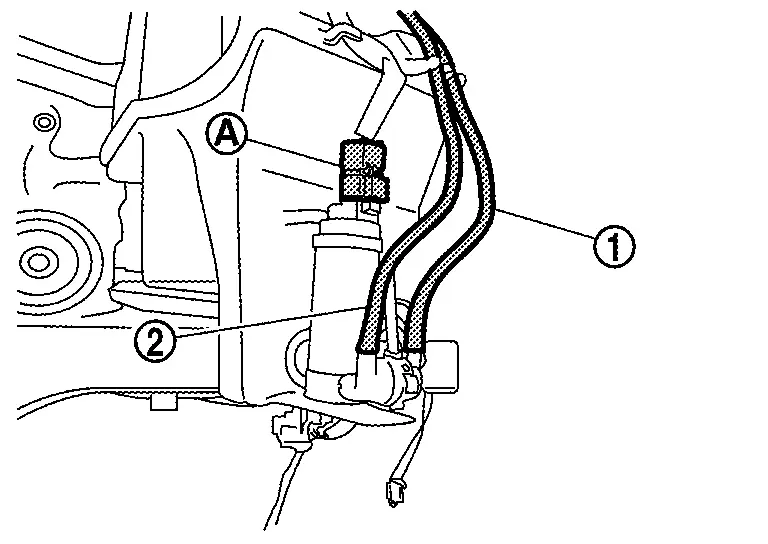
 NOTE:
NOTE:
Apply a marking either on front washer tube A or rear washer tube A when removing them so that the positions can be identified for installation.
Remove front and rear washer pump from washer tank.
Remove packing from washer tank.
INSTALLATION
Note the following items, and then install in the reverse order of removal.
CAUTION:
-
Never twist packing when installing front and rear washer pump.
-
When installing tubes to front and rear washer pump, be sure to install front and rear correctly.
-
Check that there is no leakage after installation or replace packing with new part if it has been damage.
Other materials:
Toit ouvrant panoramique du Nissan Rogue
Informations de base et sécurité
AVERTISSEMENT
Le port de la ceinture de sécurité est impératif : en cas de tonneau, le toit ouvrant du Nissan Rogue représente une zone d'éjection potentielle.
Interdiction formelle : ne laissez personne sortir la tête ou les bras par l'ouverture ...
Extérieur arrière
Cette section récapitule les équipements situés à l’arrière du Nissan Rogue : visibilité, éclairage, accès au coffre et capteurs. Vérifiez régulièrement la propreté des caméras et capteurs pour des performances optimales.
Dégivrage de lunette arrière : améliore la visibilit ...
Operation
Operation
SWITCH NAME AND FUNCTION No. Switch name Description
ProPILOT Assist switch
ProPILOT Assist switch to activate the system
CANCEL switch
Pressing the switch cancels ProPILOT Assist 2.1 control
RES± switch (RES+ operation)
Resumes set speed or increases speed ...