
Nissan Rogue (T33) 2021-Present Owner’s Manual & User Guide: Precautions on SRS
This SRS section provides essential safety information for the supplemental restraint systems installed in your Nissan Rogue. These systems are designed to enhance occupant protection when used together with properly worn seat belts.
- Driver and front passenger supplemental front-impact air bag (NISSAN Advanced Air Bag System)
- Driver and front passenger supplemental knee air bag
- Front seat-mounted side-impact supplemental air bag
- Rear outboard seat-mounted side-impact supplemental air bag
- Front central seat-mounted side-impact supplemental air bag (if so equipped)
- Roof-mounted curtain side-impact and rollover supplemental air bag
- Seat belt with pretensioner (front and rear outboard seats)
Supplemental front-impact air bag system: The NISSAN Advanced Air Bag System helps cushion the head and chest of the driver and front passenger during certain frontal collisions.
Driver and front passenger supplemental knee air bag system: This system helps reduce lower-body impact forces by cushioning the knees during specific collisions.
Front seat-mounted side-impact supplemental air bag system: Designed to help protect the chest and pelvic area of front occupants during certain side impacts by inflating on the side of the impact.
Rear outboard seat-mounted side-impact supplemental air bag system: Provides cushioning for rear outboard passengers’ chest and pelvis in qualifying side-impact collisions.
Front central seat-mounted side-impact supplemental air bag (if so equipped): Assists in protecting the head areas of the driver and front passenger in certain near-side impacts by deploying centrally.
Roof-mounted curtain side-impact and rollover supplemental air bag system: Helps protect occupant heads in front and rear outboard seats during certain side impacts or rollover collisions. Curtain air bags inflate on the impacted side during a side collision and on both sides in a rollover.
These systems supplement the protection offered by the seat belts in your Nissan Rogue and are not substitutes. Seat belts must always be worn correctly, and occupants should sit at a safe distance from the steering wheel, instrument panel and doors. The supplemental air bags function only when the ignition is in the ON position.
After switching the ignition ON, the supplemental air bag warning light illuminates and should turn off after about 7 seconds if the system is functioning properly.
WARNING
- The front air bags will generally not inflate in side impacts, rear impacts, rollovers or low-severity frontal collisions. Always wear seat belts to reduce the risk and severity of injury.
- The front passenger air bag and knee air bag will not deploy if the front passenger air bag status light is illuminated.
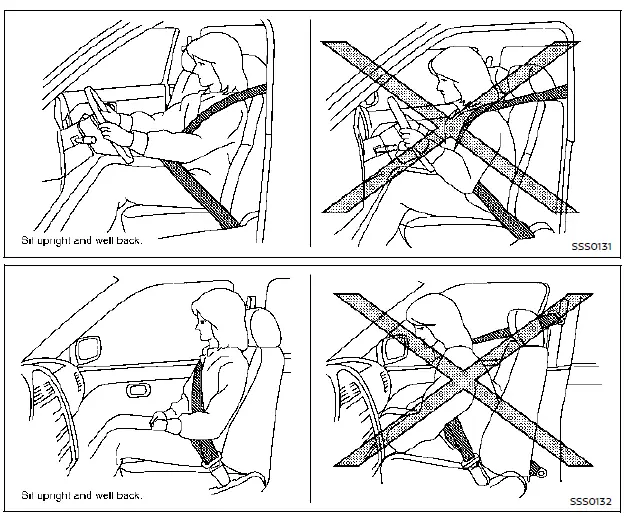
- The seat belts and front air bags are most effective when occupants sit upright with feet on the floor. Sitting too close to the air bag or leaning forward increases the risk of serious injury.
- The driver and front passenger seat belt buckles contain sensors that detect seat belt usage. Improperly worn seat belts reduce system effectiveness.
- The front passenger seat contains weight sensors that may deactivate the air bag under certain conditions. Proper seating and seat belt use are essential.
- Keep hands on the outside of the steering wheel. Placing them inside the rim may increase injury risk if the air bag deploys.
WARNING
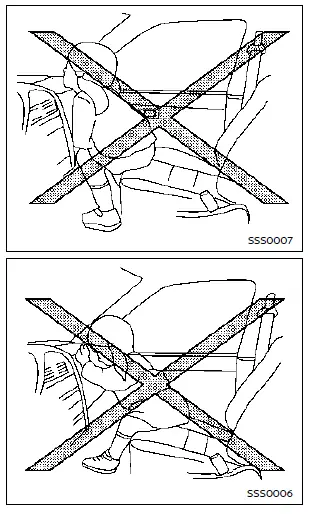
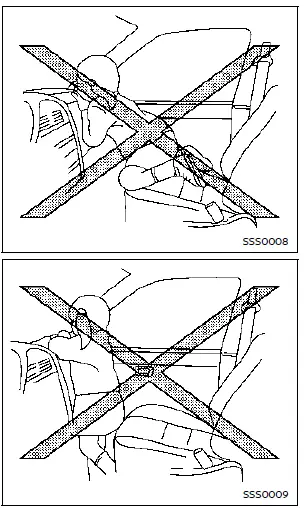
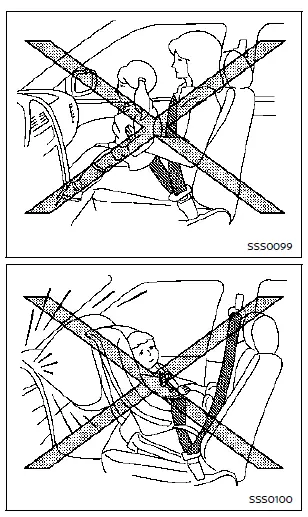
- Never allow children to ride unrestrained or extend hands or faces outside the windows. Holding a child on your lap is extremely dangerous.
- Children can be severely injured or killed by inflating air bags if not properly restrained. Pre-teens and children should always ride in the rear seat.
- Even with the NISSAN Advanced Air Bag System, never use a rear-facing child restraint in the front seat. A deploying front air bag can cause fatal injury.
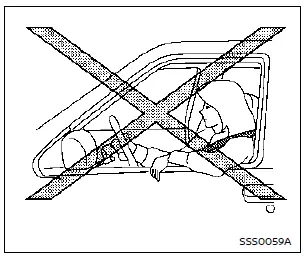
Do not lean against doors or windows.
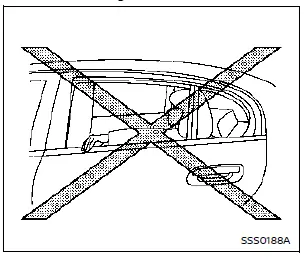
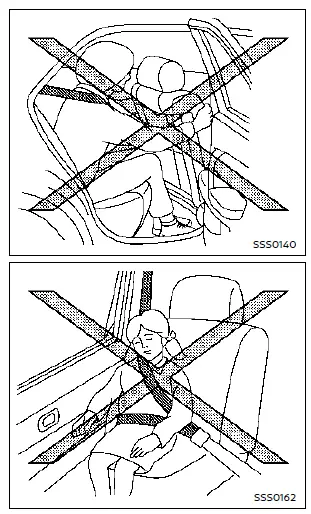
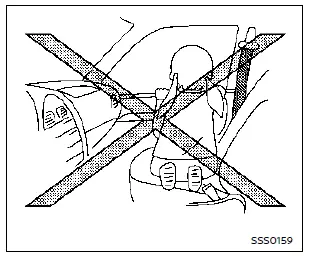
WARNING
Front, front central and rear outboard seat-mounted side-impact supplemental air bags and roof-mounted curtain side-impact and rollover supplemental air bags:
- Side air bags ordinarily will not deploy in frontal, rear, rollover or low-severity side impacts. Seat belts must always be worn.
- Curtain air bags typically do not deploy in frontal or low-severity side collisions.
- Sitting upright and well back improves effectiveness. Do not lean against doors or windows, and ensure no body parts are near air bag modules.
- Rear-seat passengers must not hold the front seatback. If side air bags deploy, they may cause serious injury.
- Do not use seat covers on seats equipped with side air bags, as they may interfere with deployment.
Other materials:
Intelligent Around View Monitor. Removal and Installation
Around View Monitor Control Unit
Removal and Installation
REMOVALCAUTION:
Perform the “ADDITIONAL SERVICE WHEN REPLACING AROUND VIEW
MONITOR CONTROL UNIT� before replacing around view monitor control
unit. Refer to Description.
Remove the center console assembly. Refer to Removal and Ins ...
Additional Service When Replacing Side Radar
Work Procedure
Always perform the side radar configuration after replacing the side radar.SIDE RADAR CONFIGURATION
Perform saving vehicle internal information according to "Replace ECU" in CONSULT Operation Manual.
>>
GO TO 2.
SIDE RADAR ALIGNMENT
Perform the side radar alignment with ...
P2480 Exhaust Gas Temperature Sensor
DTC Description
DTC DETECTION LOGIC DTC
CONSULT screen terms
(Trouble diagnosis content)
DTC detection condition
P2480
00
Exhaust gas temp sensor bank 1
(Exhaust Gas Temperature sensor Circuit/Open Bank 1 Sensor 5)
Diagnosis condition
Ignition switch ON
Signal
— ...