
Nissan Rogue (T33) 2021-Present Service Manual: Kr15ddt :: Periodic Maintenance
Engine Coolant
Inspection
LEVEL
-
Check that the reservoir tank engine coolant level is within the “MIN� to “MAX� when the engine is cool.
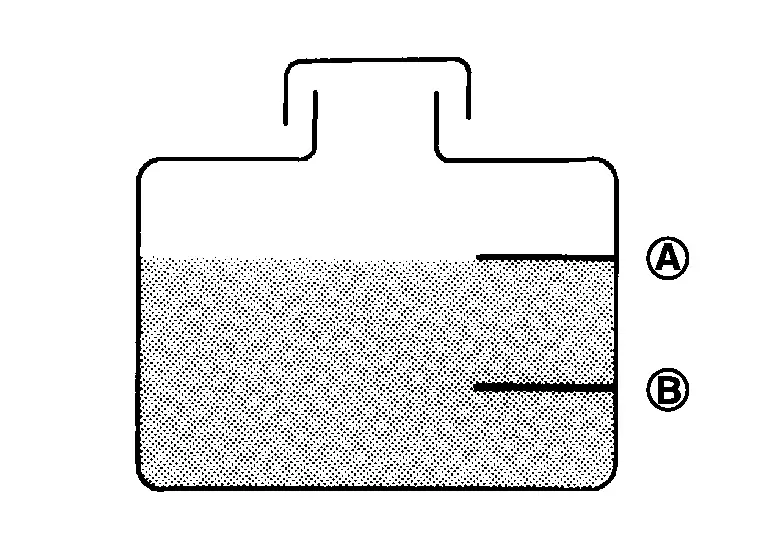

: MAX 
: MIN -
Adjust the engine coolant level if necessary.
CAUTION:
Refill Genuine NISSAN Long Life Antifreeze/Coolant (blue) or equivalent in its quality mixed with water (distilled or demineralized). Refer to Fluids and Lubricants.
LEAKAGE
-
Open the reservoir tank cap.
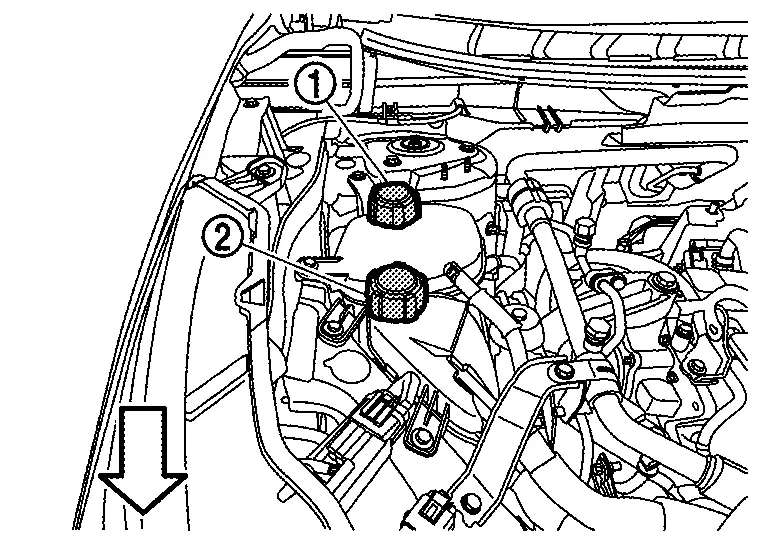

: Reservoir tank cap (for engine) 
: Reservoir tank cap (for charge air cooler) 
: Nissan Ariya Vehicle front -
To check for leakage, apply pressure to the cooling system with the radiator cap tester (commercial service tool) (A) and the radiator cap tester adapter [SST:EG17651130] (B).
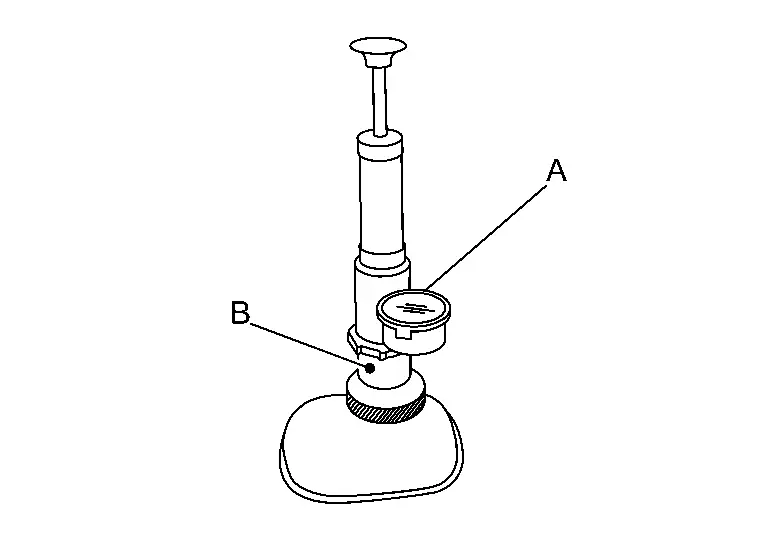
Testing pressure: Refer toInspection. WARNING:
Never remove reservoir tank cap when engine is hot. Serious burns may occur from high-pressure engine coolant escaping from engine cooling system.
CAUTION:
-
Higher test pressure than specified may cause radiator damage.
-
Use radiator cap tester adapter [SST:EG17651130] (B) for connecting radiator cap tester (commercial service tool) (A) and filler neck to prevent deformation of reservoir tank filler neck.
 NOTE:
NOTE:
In a case that engine coolant decreases, replenish radiator with engine coolant.
-
-
If anything is found, repair or replace damaged parts.
Draining
WHEN DRAIN ENGINE COOLANT USING DRAIN HOSE
WARNING:
-
Never remove reservoir tank cap when engine is hot. Serious burns may occur from high-pressure engine coolant escaping from radiator.
-
Wrap a thick cloth around the reservoir tank cap. Slowly turn it a quarter of a turn to release built-up pressure. Then turn it all the way.
NOTE:
This procedure is for engine cooling system. For procedures involving charge air cooler system, refer to Draining.
Remove engine under cover and engine under cover front. Refer to Removal and Installation.
Connect drain hose.
-
Use a genera-purpose hose with the dimensions show in the figure.
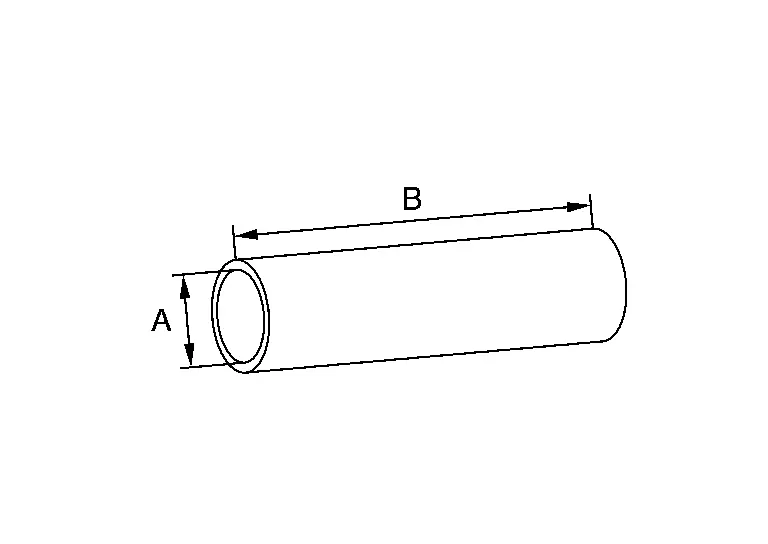
A : φ 8.5 mm (0.335 in) B : 150 mm (5.91 in)
Open radiator drain cock at the bottom of radiator, and then remove reservoir tank cap.
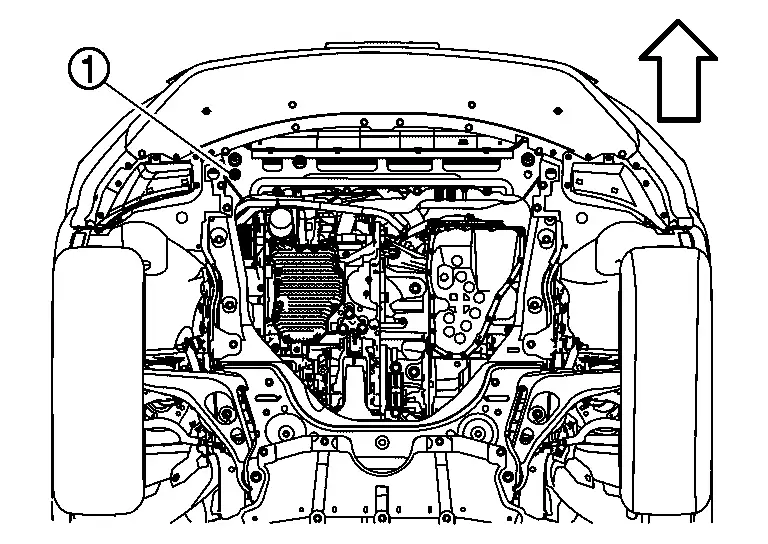
 |
: Nissan Ariya Vehicle front |
CAUTION:
-
Perform this step when engine is cold.
-
Draining coolant from the radiator, should make sure that the drain plug is pointed downwards.
-
When draining all of engine coolant in the system, open water drain plugs on cylinder block. Refer to Setting.
Remove reservoir tank if necessary, and drain engine coolant and clean reservoir tank before installing.
Check drained engine coolant for contaminants such as rust, corrosion or discoloration. If contaminated, flush the engine cooling system. Refer to Flushing.
Disconnect drain hose.
WHEN DRAIN ENGINE COOLANT USING TEMPORARY PIPE
NOTE:
This procedure is for engine cooling system. For procedures involving charge air cooler system, refer to Draining.
When draining coolant, follow the instructions below and create a temporary pipe to prevent from splashing.Prepare soft plastic board (e.g. plastic file folder) and roll up the plastic board.
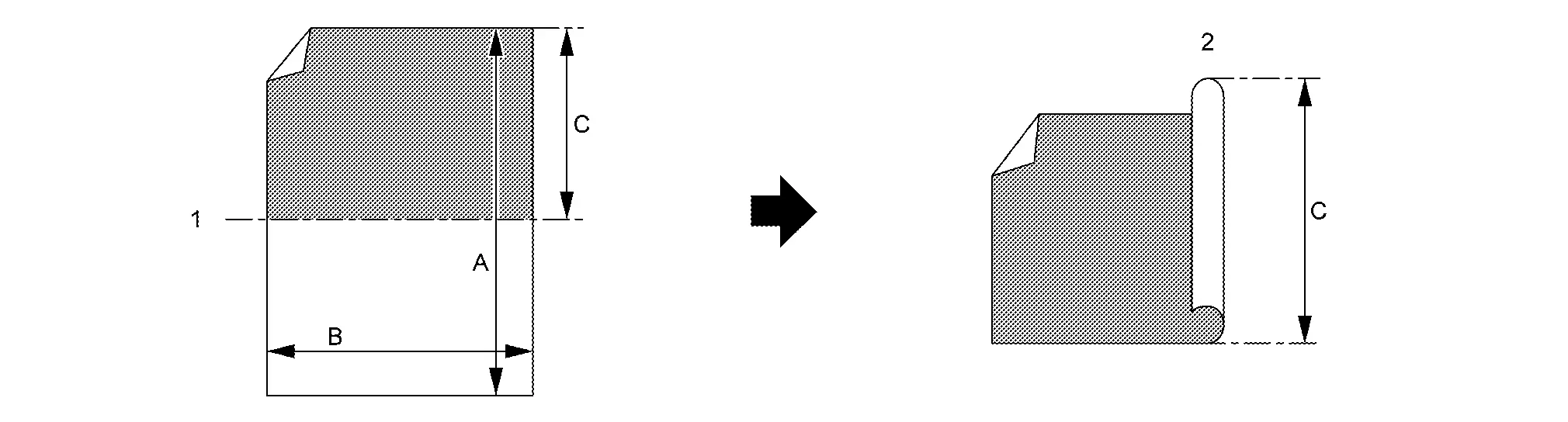
| A | Approx. 295 mm (11.61 in) | B | Approx. 210 mm (8.27 in) | C | Approx. 145 mm (5.71 in) |
Check that the length of temporary pipe (A) approx. 145 mm (5.71 in).
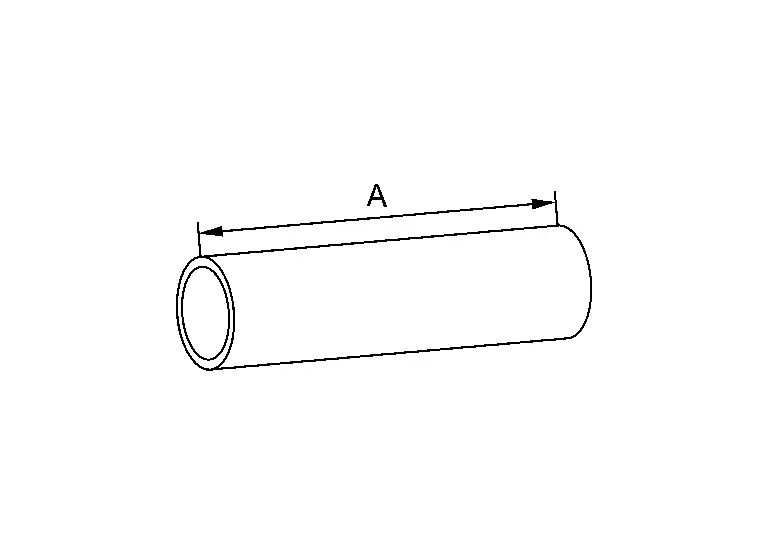
Remove engine under cover front. Refer to Removal and Installation.
Align the plastic board with the outside diameter of drain guide and fix with tape.
Install temporary pipe (A) to drain guide.
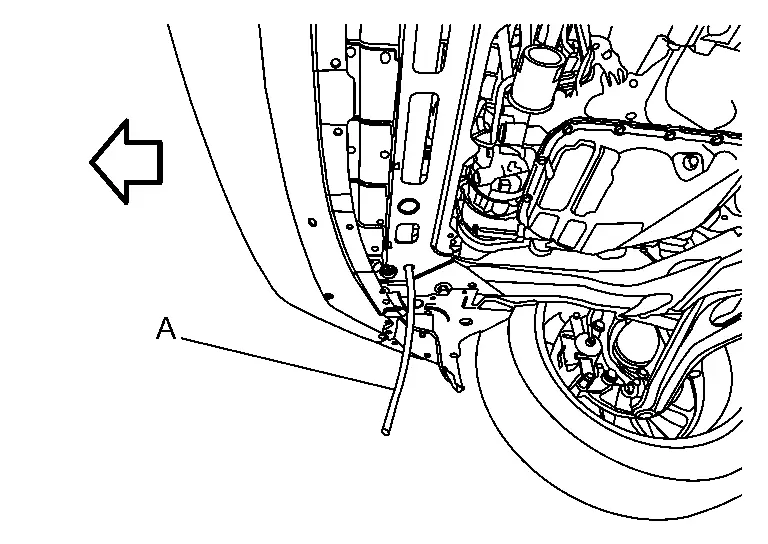
|
: Nissan Ariya Vehicle front |
Open radiator drain cock and reservoir tank cap, and then drain engine coolant.
|
: Nissan Ariya Vehicle front |
CAUTION:
Perform this step when engine is cold.
-
When draining all of engine coolant in the system, open water drain plugs on cylinder block. Refer to Setting.
Remove temporary pipe.
Refilling
CAUTION:
-
Do not put additive such as waterleak preventive, since it may cause cooling waterway clogging.
-
When refilling use Genuine NISSAN Long Life Antifreeze/Coolant (blue) or equivalent in its quality mixed with water (distilled or demineralized). Refer to Fluids and Lubricants.
NOTE:
This procedure is for engine cooling system. For procedures involving charge air cooler system, refer to Refilling.
Install reservoir tank if removed and radiator drain cock.
CAUTION:
Be sure to clean drain cock and install with new O-ring.
| Radiator drain cock | : Refer to Exploded View. |
-
If water drain plugs on cylinder block are removed, close and tighten them. Refer to Setting.
Check that each hose clamp has been firmly tightened.
Refill reservoir tank to “MAX� level line with engine coolant.
| A | : MAX |
| B | : MIN |
|
Reservoir tank engine coolant capacity (At “MAX� level) |
|
| Refer to Periodical Maintenance Specification. |
Install reservoir tank cap.
Warm up engine until opening thermostat. Standard for warming-up time is approximately 10 minutes at 3,000 rpm.
-
Without CONSULT, turn on cabin heater switch.
-
With CONSULT, open the ENGINE COOLANT BYPASS VALVE by using CONSULT WORK SUPPORT function. Refer to CONSULT Function.
-
Check thermostat opening condition by touching radiator hose (lower) to see a flow of warm water.
CAUTION:
Watch water temperature gauge so as not to overheat engine.
Stop the engine and cool down to less than approximately 50°C (122°F).
-
Cool down using fan to reduce the time.
CAUTION:
Never adhere the engine coolant to electronic equipments (alternator etc.).
Refill reservoir tank to “MAX� level line with engine coolant.
Repeat steps 3 through 8 two or more times with radiator cap installed until engine coolant level no longer drops.
Check cooling system for leakage with engine running.
Warm up the engine, and check for sound of engine coolant flow while running engine from idle up to 3,000 rpm with heater temperature controller set at several position between “COOL� and “WARM�.
-
Sound may be noticeable at heater unit.
Repeat step 11 three times.
If sound is heard, bleed air from cooling system by repeating step 3 through 8 until reservoir tank level no longer drops.
Flushing
Install reservoir tank if removed and radiator drain cock.
CAUTION:
-
Be sure to clean the drain plug.
-
Do not reuse O-ring.
| Radiator drain cock | : Refer to Exploded View. |
-
If water drain plugs on cylinder block are removed, close and tighten them. Refer to Setting.
Fill radiator and reservoir tank with water and reinstall radiator cap.
Run the engine and warm it up to normal operating temperature.
Rev the engine two or three times under no-load.
Stop the engine and wait until it cools down.
Drain water from the system. Refer to Draining.
Repeat steps 1 through 6 until clear water begins to drain from radiator.
Sub Radiator Coolant
Inspection
LEVEL
-
Check that the reservoir tank engine coolant level is within the “MIN� to “MAX� when the engine is cool.
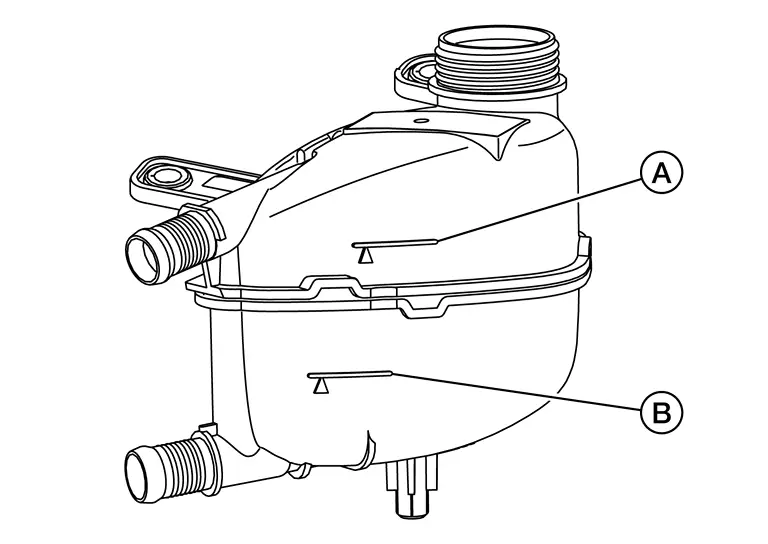
A. : MAX B. : MIN -
Adjust the engine coolant level if necessary.
CAUTION:
Refill Genuine NISSAN Long Life Antifreeze/Coolant (blue) or equivalent in its quality mixed with water (distilled or demineralized). Refer to Fluids and Lubricants.
CHECKING COOLING SYSTEM FOR LEAKS
WARNING:
-
Do not remove the radiator cap or reservoir tank cap when the engine is hot. Serious burns could occur from high-pressure engine coolant escaping from the cooling system.
-
When removing the radiator cap or reservoir tank cap, wrap a thick cloth around the cap and slowly turn it a quarter turn to allow built-up pressure to escape. Then carefully remove the cap by turning it all the way.
-
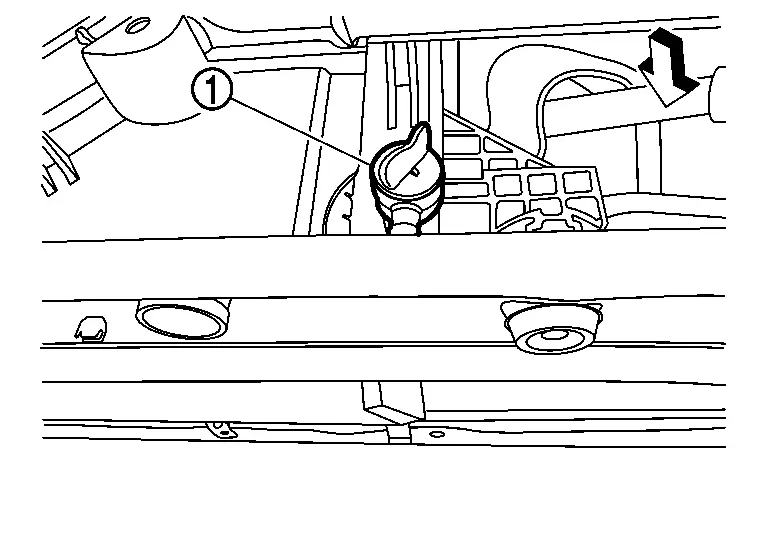
Open the reservoir tank cap.
1. : Reservoir tank cap (for engine) 2. : Reservoir tank cap (for charge air cooler) : Nissan Ariya Vehicle front -
Install tools (A), (B), (C) and (D) to reservoir tank and apply pressure to the cooling system.
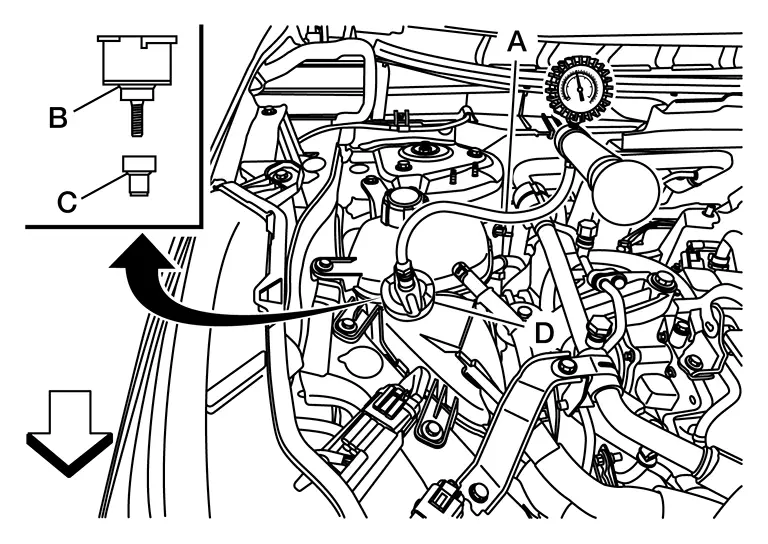
Tool number (A) : — (NI-51771-5) Tool number (B) : — (NI-51771-1) Tool number (C) : — (NI-51771-2) Tool number (D) : — (NI-51771-9) Leakage test pressure : Refer to Inspection. CAUTION:
Higher pressure testing than specified may cause radiator damage.
NOTE:
In a case that engine coolant decreases, replenish radiator with engine coolant.
-
If anything is found, repair or replace damaged parts.
Draining
WHEN DRAIN ENGINE COOLANT USING DRAIN HOSE
WARNING:
-
Never remove reservoir tank cap when engine is hot. Serious burns may occur from high-pressure engine coolant escaping from radiator.
-
Wrap a thick cloth around the reservoir tank cap. Slowly turn it a quarter of a turn to release built-up pressure. Then turn it all the way.
Remove engine under cover and engine under cover front. Refer to Removal and Installation.
Connect drain hose.
-
Use a general-purpose hose with the dimensions show in the figure.
A. : φ 22.0 mm (0.87 in) B. : 150 mm (5.91 in)
Open radiator drain cock (1) at the bottom of radiator, and then remove reservoir tank cap.
|
: Nissan Ariya Vehicle front |
CAUTION:
-
Perform this step when engine is cold.
-
Draining coolant from the radiator, should make sure that the drain plug is pointed downwards.
Remove reservoir tank if necessary, and drain engine coolant and clean reservoir tank before installing.
Disconnect drain hose.
WHEN DRAIN ENGINE COOLANT USING TEMPORARY PIPE
When draining coolant, follow the instructions below and create a temporary pipe to prevent from splashing.Prepare soft plastic board (e.g. plastic file folder) and roll up the plastic board.
| A | Approx. 295 mm (11.61 in) | B | Approx. 210 mm (8.27 in) | C | Approx. 145 mm (5.71 in) |
Check that the length of temporary pipe (A) approx. 145 mm (5.71 in).
Remove engine under cover front. Refer to Removal and Installation.
Align the plastic board with the outside diameter of drain guide and fix with tape.
Install temporary pipe (A) to drain guide.
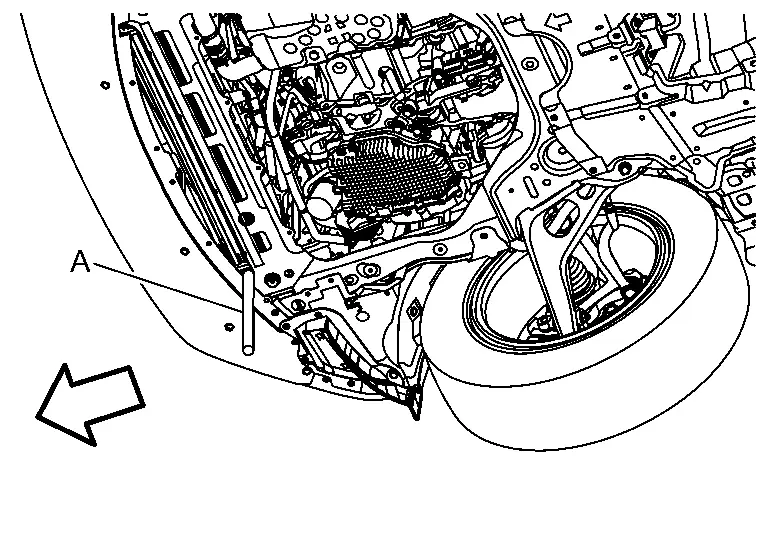
|
: Nissan Ariya Vehicle front |
Open sub radiator drain plug and reservoir tank cap, and then drain charge air cooler coolant.
CAUTION:
Perform this step when engine is cold.
Remove temporary pipe.
Refilling
CAUTION:
-
Do not put additive such as waterleak preventive, since it may cause cooling waterway clogging.
-
When refilling use Genuine NISSAN Long Life Antifreeze/Coolant (blue) or equivalent in its quality mixed with water (distilled or demineralized). Refer to Fluids and Lubricants.
Install reservoir tank if removed and sub radiator drain plug.
CAUTION:
Be sure to clean drain cock and install with new O-ring.
| Sub radiator drain plug | : Refer to Exploded View. |
Remove the reservoir tank cap.
Fill the sub radiator cooling system with engine coolant using Tool (A), following the manufacturer's instructions included with the tool.
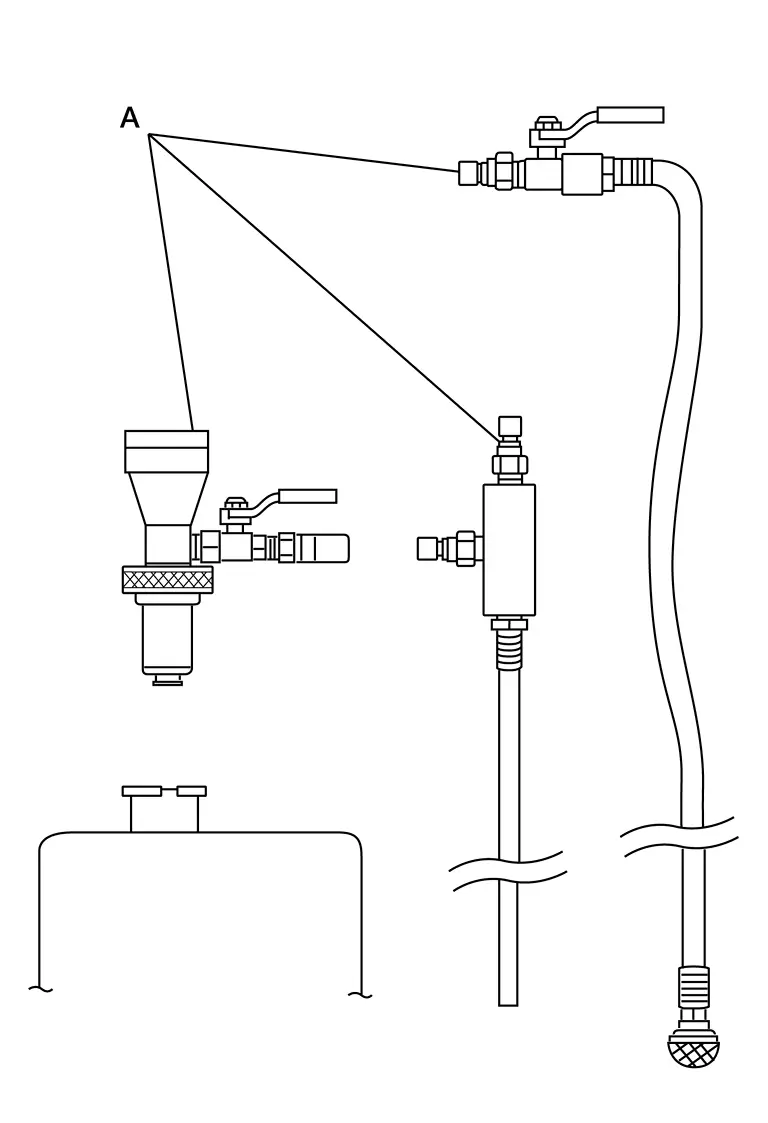
| Tool number | : KV991J0070 (NI-45695-A) |
| Engine coolant | : Refer to Fluids and Lubricants |
NOTE:
When installing Tool (A) to reservoir tank filler neck, make sure to select the correct size expansion plug (B).
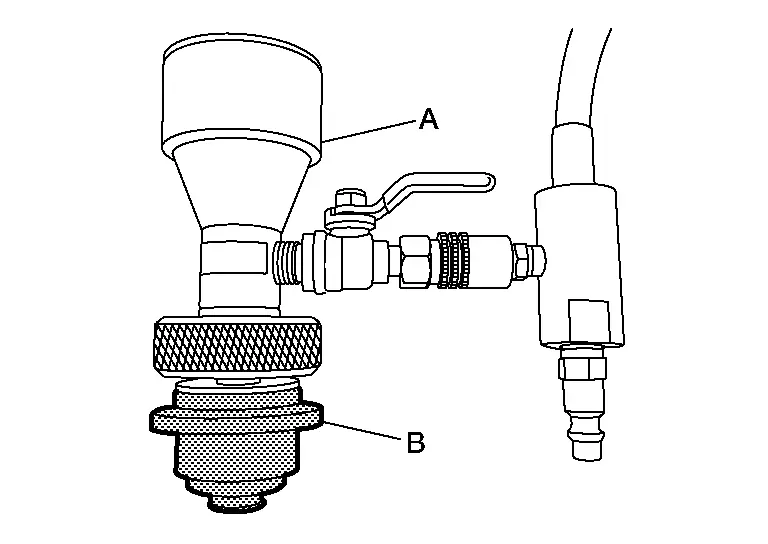
On the CONSULT screen, select "ENGINE" >>"Active Test">>"Charge air cooler cooling electric water pump">> and then "FULL drive".
Start engine and then let idle for three minutes.
-
Check "Electric water pump 1 duty" while engine is idling and verify value is between 68% - 83%.
NOTE:
If the value is between 84% - 92% for more than 5 seconds, engine OFF and skip to step 7.
Engine OFF.
Refill reservoir tank to “MAX� level line with engine coolant.
| A. | : MAX |
| B. | : MIN |
Repeat steps 4-7 until "Electric water pump 1 duty" value is between 68% - 83% for more than three minutes.
Once step 8 has been completed, repeat steps 4-7 one additional time.
Install reservoir tank cap.
Check cooling system for leaks with engine running.
Radiator
Reservoir Tank Cap
Inspection
-
Connect radiator cap tester (commercial service tool) (A) with radiator cap tester adapter [SST: EG17651130] (B) and check injection-valve opening pressure of pressure adjusting valve by applying pressure.
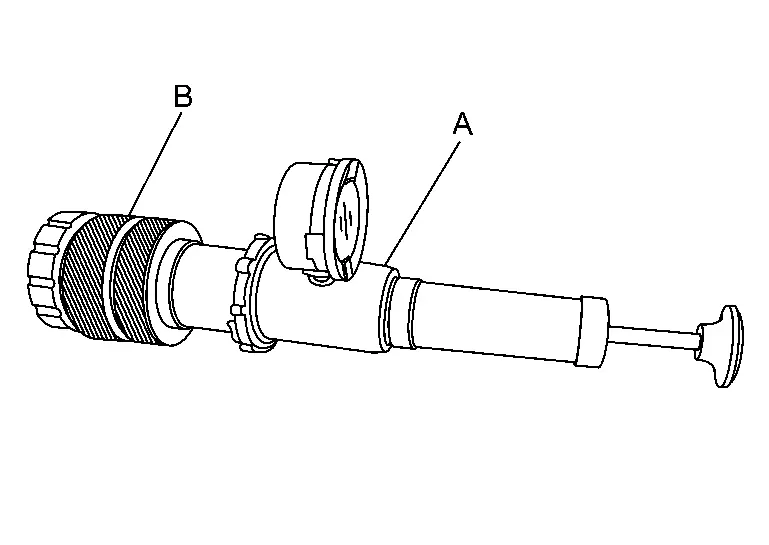
Standard : Radiator -
When installing reservoir tank cap to radiator cap tester (commercial service tool), apply water or coolant to the seal of cap.
-
If negative pressure valve has a malfunction or injection-valve opening pressure is outside the reference value, replace reservoir tank cap.
Radiator
Inspection
Check radiator for mud or clogging. If necessary, clean radiator as follows.
CAUTION:
-
Be careful not to bend or damage radiator fins.
-
When radiator is cleaned without removal, remove all surrounding parts such as radiator cooling fan assembly and horns. Then tape harness and harness connectors to prevent water from entering.
Apply water by hose to the back side of the radiator core vertically downward.
Apply water again to all radiator core surfaces once per minute.
Stop washing if any stains no longer flow out from radiator.
Blow air into the back side of radiator core vertically downward.
-
Use compressed air lower than 490 kPa (4.9 bar, 5 kg/cm2, 71 psi) and keep distance more than 30 cm (11.81 in).
Blow air again into all the radiator core surfaces once per minute until no water sprays out.
Other materials:
P00d2 Ho2s2 Heater
DTC Description
DTC DETECTION LOGIC DTC
CONSULT screen terms
(Trouble diagnosis content)
DTC detection condition
P00D2
00
Heated O2 sensor heater B1 sensor 2
(HO2S heater control circuit range/performance bank 1 sensor 2)
Diagnosis condition
—
Signal (terminal)
...
Dtc/circuit Diagnosis. B2f70-01 Stop Lamp
DTC Description
DTC DETECTION LOGIC DTC No.
CONSULT screen items
(Trouble diagnosis content) DTC detecting condition
B2F70-01
Stop lamp
(Stop lamp)
Diagnosis condition
When brake pedal is depressed
Signal (terminal)
Stop lamp switch 1 signal
Stop lamp switch 2 si ...
Dtc/circuit Diagnosis. Lin Communication Circuit
Diagnosis Procedure
CHECK BCM OUTPUT SIGNAL
Ignition switch ON.
Check signal between BCM harness connector and ground using an oscilloscope.
(+) (−)
Signal
(Reference value)
BCM
Connector Terminal
With type A meter: B123
91
Ground
With type B meter: M18 ...